11 Modern Kitchen Island Ideas That Are Worth the Investment
A good island changes how your kitchen works every single day. These 11 ideas show you exactly what is possible and what is actually worth spending on.
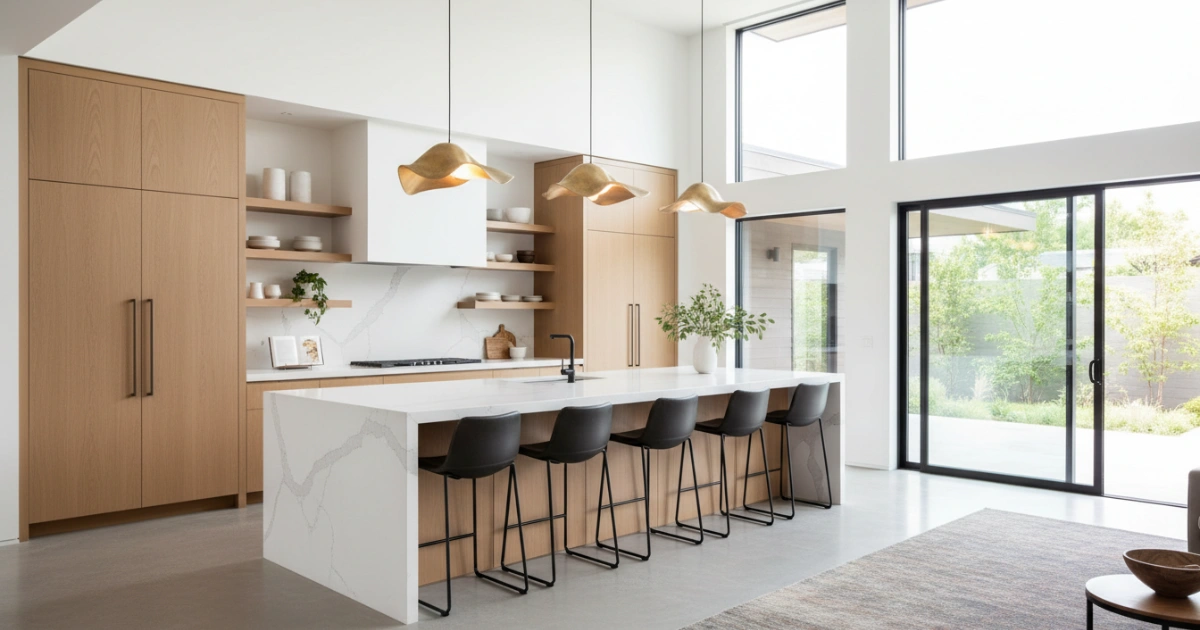
A kitchen island is the most used surface in the house. It is where you prep food, eat breakfast, help with homework, charge phones, and talk to whoever is cooking. It earns its footprint every single day.
That is why getting it right matters more than almost any other decision in a kitchen remodel. The wrong island is just an obstacle. The right one makes the whole room work better.
We put together 11 ideas that cover the full range. Big statements and practical upgrades. High budgets and modest ones. There is something here for most kitchens and most homeowners.
Island Design & Form
Ideas 1–5The Waterfall Island
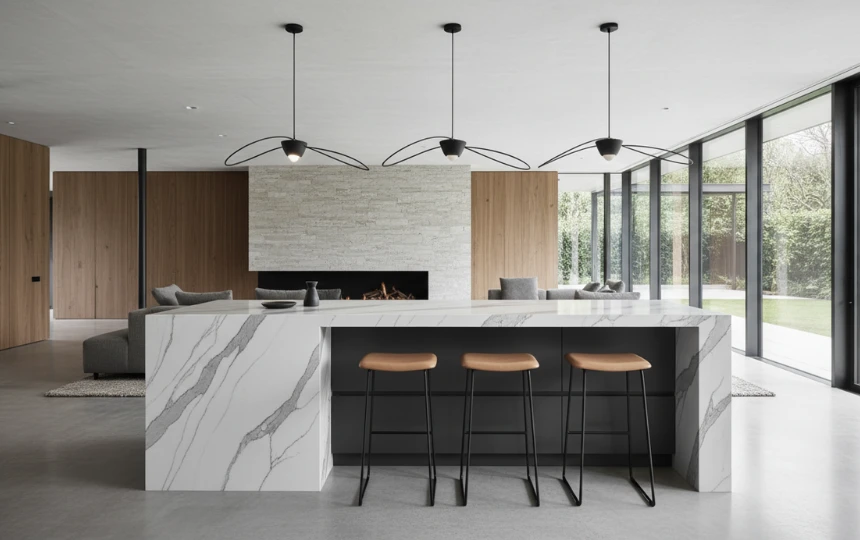
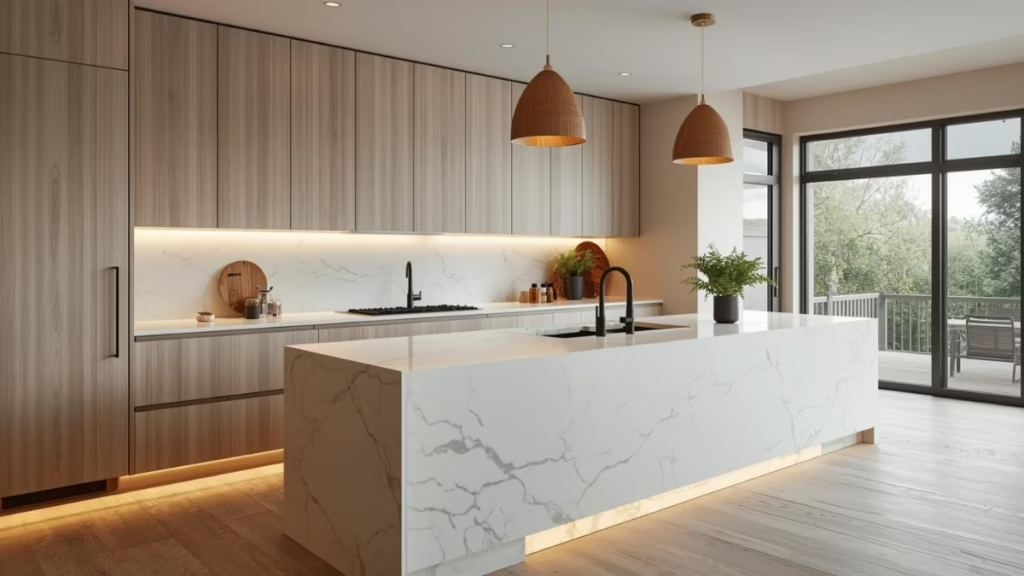
The waterfall island is the statement piece of modern kitchen design. The countertop material drops vertically down one or both sides of the island all the way to the floor. No visible cabinet base. Just one continuous surface.
It reads as sculptural rather than functional. Which is exactly why it works so well. A kitchen island is the visual center of any open-plan space, and a waterfall makes it look like it was designed rather than assembled.
Calacatta quartz and honed Carrara marble are the most popular materials. Dramatically veined quartzite is even more striking. The technique also works in solid wood, which gives a warmer, more artisanal result.
Budget carefully for this one. The extra stone and precision cutting adds 25 to 40 percent to the countertop cost. It is a genuine investment. But in a well-designed kitchen, it tends to be the first thing every guest mentions.
Butcher Block Island Top
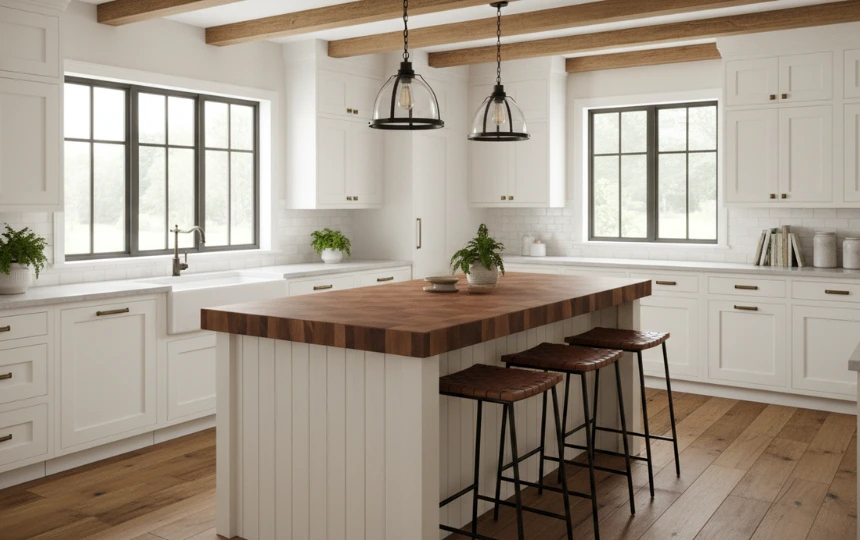
Using butcher block on the island while keeping stone on the perimeter countertops is one of the most practical and visually satisfying moves in kitchen design.
Wood is gentler on knives. It gives you a naturally grippy prep surface. And it introduces organic warmth that softens a kitchen full of stone and painted cabinets.
Walnut end-grain is the premium choice. The tight, circular grain pattern is more water-resistant and develops a rich, dark patina over time. White oak and maple are more affordable and still look beautiful. All three are widely available and straightforward to source.
Maintenance is minimal. Oil with food-safe mineral oil a few times a year. Sand out any deep scratches if they bother you. That is it. Many people find they grow to love the marks and worn patches over time. They tell the story of the kitchen being used.
Furniture-Style Island With Visible Legs
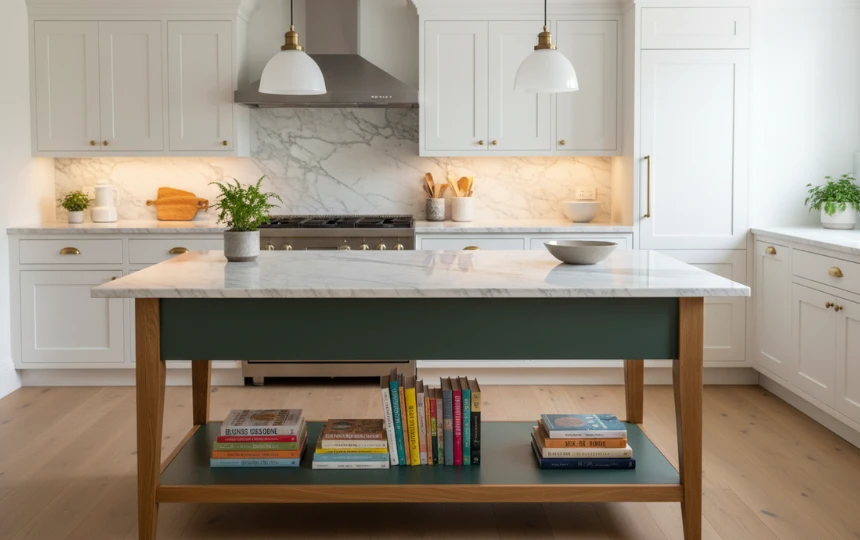
Most kitchen islands look like built-in cabinetry because that is exactly what they are. A furniture-style island looks like a piece of furniture that happens to be in your kitchen. The difference is significant.
Visible legs are what make it work. Tapered wood legs, turned legs, or straight steel legs lift the island visually off the floor. The space underneath makes the room feel more open. And the island itself gains a presence that standard flush-to-floor cabinetry simply cannot match.
Paint the island body a contrasting color to the perimeter cabinets. A deep green or terracotta island against white cabinets is a combination that photographs incredibly well and feels genuinely considered in person.
This style suits transitional and contemporary-eclectic kitchens best. It works less well in very sleek, minimalist spaces where the traditional leg detail can feel out of place.
Island With Integrated Dining
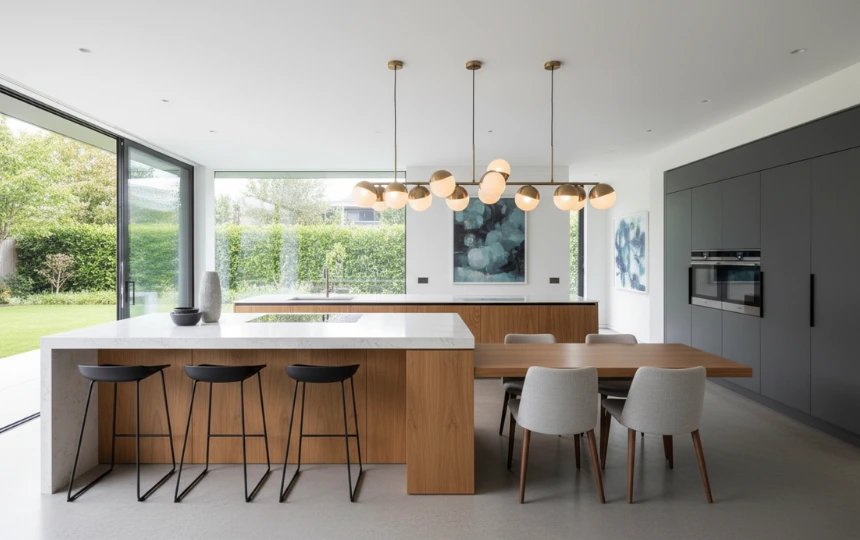
In open-plan homes, a separate dining table and a kitchen island often compete for the same space. Extending the island to include a dining area at one end solves that problem completely.
The island handles prep at standard counter height (36 inches) on one end. At the other end, the surface drops to standard table height (30 inches) with enough overhang for proper dining chairs. One island. Two functions. No separate table needed.
The step down in the island base handles the height transition. It looks intentional rather than awkward when the joinery is clean. A statement pendant cluster above the dining end defines that zone without needing walls or screens.
This is one of the most genuinely functional island ideas for families. It keeps everyone in the same room during meals and removes the constant clearing and resetting that a separate table demands.
Contrasting Color Island
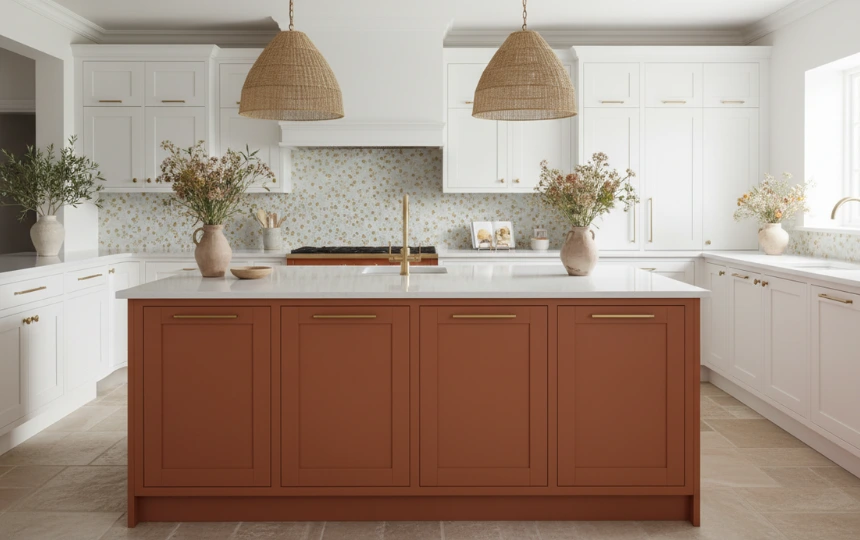
Painting the island a different color from the perimeter cabinets is the most affordable way to add genuine personality to a kitchen.
It works because the island is a freestanding element. It has always been visually separate from the wall cabinets. Treating it as a separate piece of furniture with its own color makes design sense.
The combinations that work best have real contrast. Deep green against white. Terracotta against cream. Navy against warm grey. Charcoal against off-white. The more clearly the two colors are differentiated, the more intentional the result looks.
Keep the countertop and hardware consistent across the whole kitchen. That consistency holds the two colors together. Change too much and the kitchen starts to look disjointed rather than designed.
Island Size: What Actually Fits in Your Kitchen
You need at least 42 inches of clear walkway on every side of the island. That is the minimum. 48 inches is comfortable. 60 inches feels generous. Measure your space with tape on the floor before committing to any island size. A 4 x 2 foot island is a practical minimum for a single prep zone. A 6 x 3 foot island gives you room for seating on one side and prep on the other. Anything larger than 8 x 4 feet starts to feel like an obstacle in most residential kitchens rather than a feature.
Function & Detail
Ideas 6–11Hidden Appliance Island
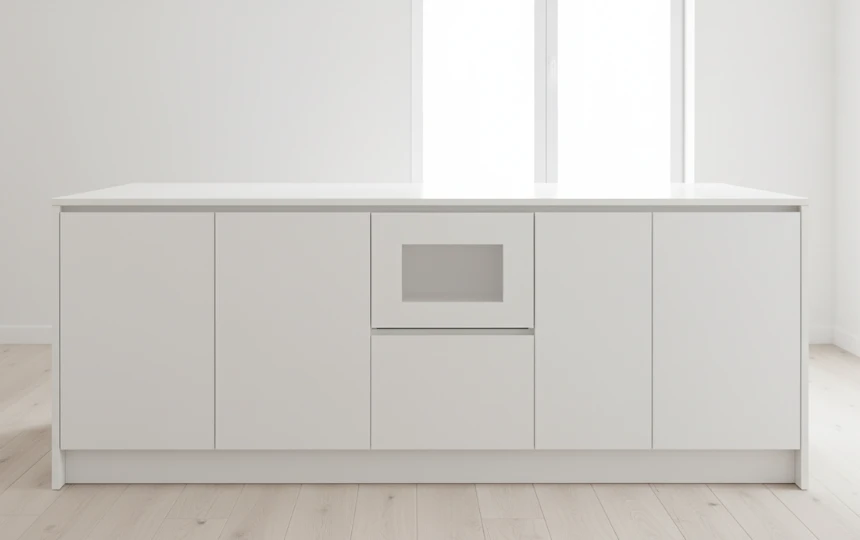
The cleanest kitchen islands hide everything that would otherwise clutter the countertop.
A microwave drawer built into the island base is one of the best examples. Drawer microwaves from Sharp, Wolf, and Dacor pull out at mid-height. They are far more ergonomic than an over-range microwave. And when closed, they are completely invisible. The countertop above stays clear.
The same principle applies to warming drawers, dishwasher drawers, and beverage fridges. All of these can be integrated into an island base behind matching cabinet panels. Each one removes an appliance from the countertop and the perimeter walls, simplifying the whole kitchen.
This is what separates a thoughtfully designed kitchen from one that just looks nice in photographs. The function is built in. Nothing needs to be moved or tidied away before company arrives.
The Minimal Slab Island
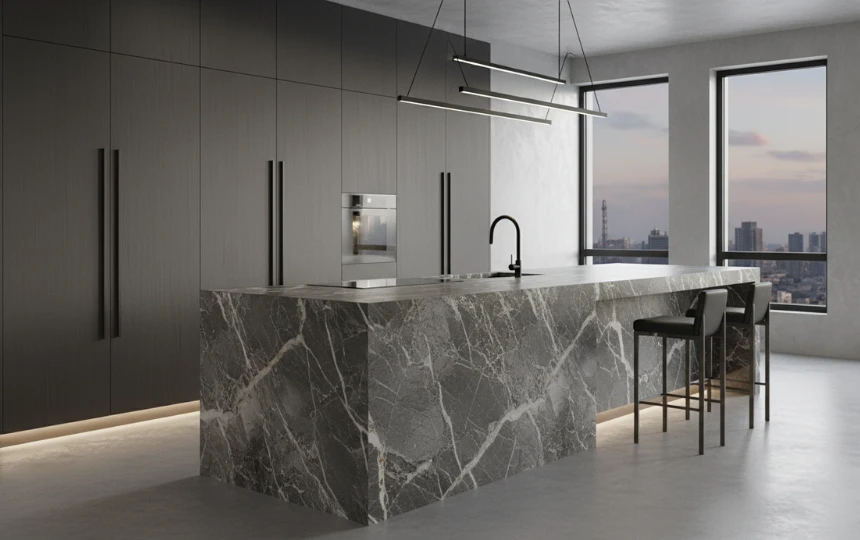
Sometimes the most powerful design move is the simplest one.
A minimal slab island strips the idea of a kitchen island back to its most essential form. A thick surface. Clean sides. Nothing unnecessary. No visible hardware, no decorative detail, no seating overhang competing for attention. Just the material.
This works best with materials that are visually interesting enough to carry the whole design on their own. Heavily veined quartzite, concrete, honed dark granite, and large-format Dekton all qualify. The material becomes the statement. Everything around it steps back.
Storage still happens. It is just concealed behind push-to-open panels that maintain the clean exterior. From the outside, the island looks like a solid object placed in the kitchen. That sense of deliberate simplicity is exactly what makes it memorable.
Island With Open Shelving on One Side
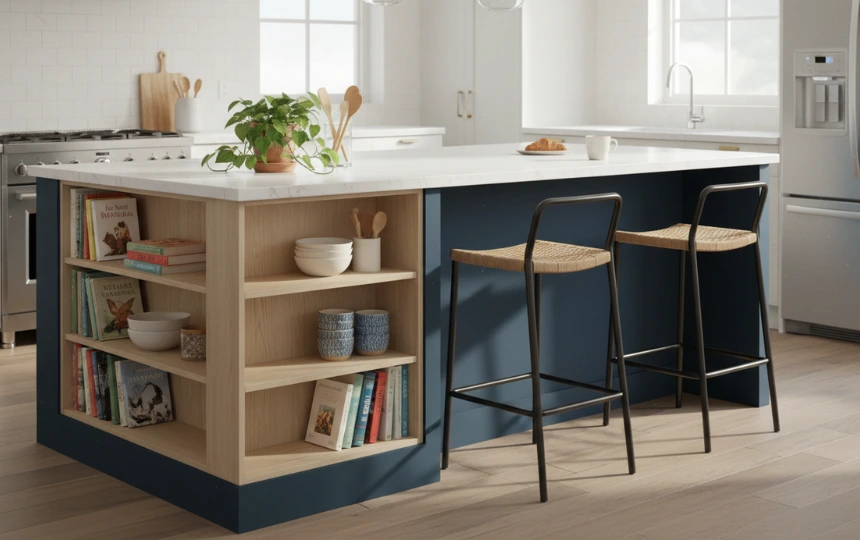
An island with open shelving on one side does something a fully enclosed island cannot. It gives you a place to display the kitchen objects that you want to show.
Cookbooks. A small plant. A stack of ceramic plates. A bottle of good olive oil. These things belong in a kitchen. Open shelving on the island face gives them a proper home that is both accessible and visible.
The practical side works well too. Things you reach for every day are faster to grab from an open shelf than from behind a cabinet door. Not every item in a kitchen needs to be hidden.
Keep the display edited. Three or four items per shelf, not twelve. The shelf should look deliberately arranged, not like an overflow storage zone. That distinction is everything.
Curved Island
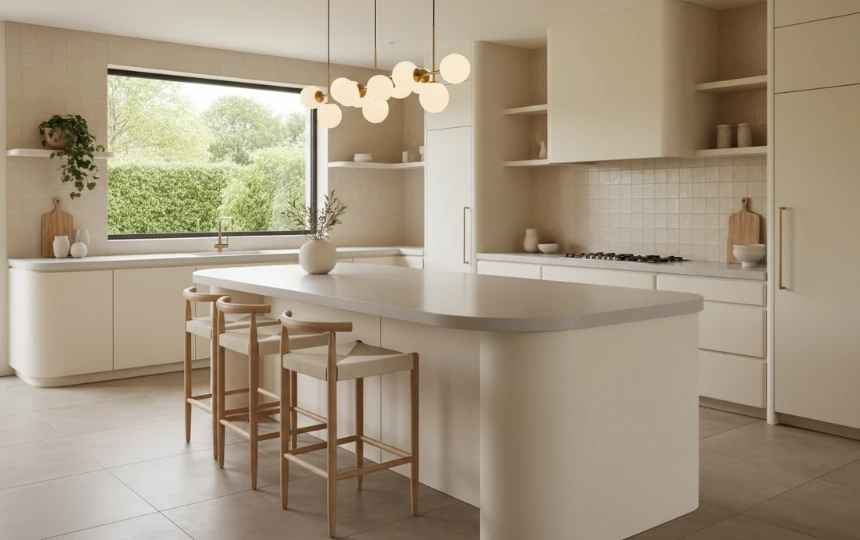
Curved islands are having a proper moment right now. And unlike some trends, this one has real design logic behind it.
A curved island softens the geometry of a rectangular kitchen. It makes the room feel less like a box. The rounded edge is also genuinely more comfortable to stand at and to walk past. Sharp corners are not pleasant to bump into. Curved ones simply are not an issue.
Full oval and kidney shapes work in larger kitchens. A subtly curved end on an otherwise rectangular island works in almost any size. The curve does not need to be dramatic to have an effect. Even a gentle radius on the corners changes the feeling of the whole room.
Curved cabinetry costs more than straight runs. The doors are custom, the countertop template is more complex. Budget for a 20 to 35 percent premium over a standard rectangular island of the same size.
Island With Integrated Charging and Power
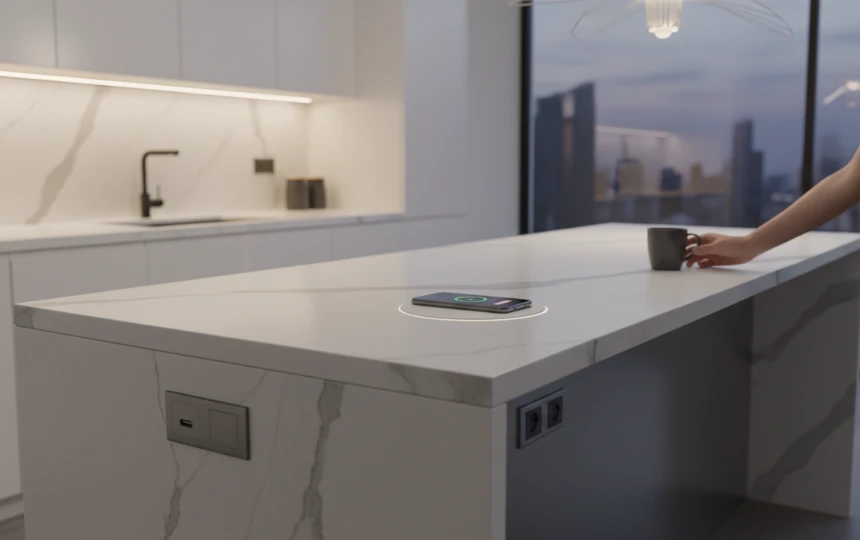
The kitchen island is where phones go to die. Everyone dumps them there. They run out of charge. Someone needs to find the cable. It is a small daily frustration that is completely solvable at the design stage.
Flush-mounted USB-C charging ports integrated into the countertop edge are the cleanest solution. Wireless Qi charging pads embedded directly into the surface work even better. Neither requires a cable to be left out on the counter.
While you are planning electrical, add outlets at multiple points along the island base. A pop-up outlet that sits flush when not in use keeps the aesthetic clean. Planning this before installation costs very little. Adding it afterward requires cutting into finished cabinetry and countertops.
These details do not photograph impressively. But they are noticed every single day by everyone who uses the kitchen. That is the definition of a good investment.
The Compact Single-Wall Island
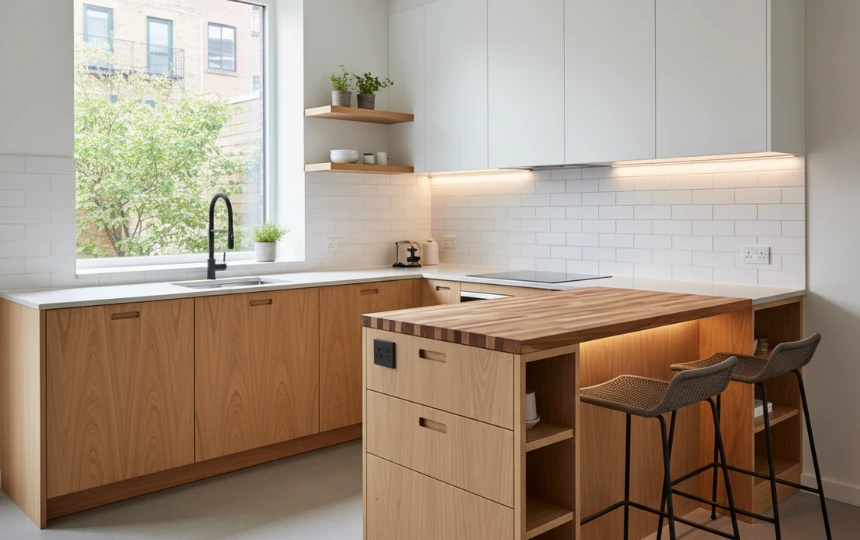
Not every kitchen can fit a large island. That does not mean you cannot have one at all.
A compact island measuring 48 by 24 inches adds meaningful prep space and storage to a small kitchen without blocking the workflow. Two drawers on one side handle utensils and dry goods. A seating overhang on the other side fits two bar stools for breakfast or casual meals.
The key in a small kitchen is to keep the island proportional. An island that is too large makes the room feel crowded and difficult to navigate. Too small and it feels like an afterthought. Aim for an island that leaves at least 42 inches of clearance on the sides you walk past most.
A rolling island is worth considering if your kitchen layout changes or if you occasionally need to free up floor space. A good quality rolling island in solid wood or painted MDF looks intentional rather than temporary. Lock the wheels when it is in position and most people would not notice it is not fixed.
| Island Type | Min Kitchen Size | Best Feature | Approx. Cost |
|---|---|---|---|
| Waterfall Stone | 200 sq ft + | Visual drama | $8,000 – $25,000+ |
| Butcher Block Top | 150 sq ft + | Warmth, knife-friendly | $1,500 – $5,000 |
| Furniture-Style | 160 sq ft + | Character, open feel | $3,000 – $10,000 |
| Integrated Dining | 220 sq ft + | Replaces dining table | $5,000 – $15,000 |
| Contrasting Color | 150 sq ft + | Personality, low cost | $500 – $2,000 extra |
| Hidden Appliance | 180 sq ft + | Clean countertop | $4,000 – $12,000 |
| Curved Island | 200 sq ft + | Soft geometry | $5,000 – $18,000 |
| Compact Single-Wall | 100 sq ft + | Works in small kitchens | $800 – $3,500 |
Want to Know What Your Island Renovation Will Cost?
Our free renovation cost calculator gives you a realistic estimate based on your kitchen size, island type, and location. No email required.
Calculate Your Budget →Start With What Your Kitchen Actually Needs
The best island is not the most impressive one. It is the one that fits your kitchen’s proportions, suits how you actually cook, and gets used properly every day.
If you have a large open-plan kitchen and you like to entertain, a waterfall island with integrated dining is worth every penny. If you have a modest kitchen and just need more prep space and storage, a compact island with drawer-heavy base cabinets will serve you far better than something oversized and spectacular.
Get the size and function right first. Then choose the materials and details that make it beautiful.
Frequently Asked Questions About Kitchen Islands
You need at least 42 inches of clear walkway on every side of the island that people walk past. 48 inches is more comfortable and is the recommended minimum if you cook with others in the kitchen regularly. The island itself should be at least 48 inches long and 24 inches wide to be genuinely useful as a prep surface. In kitchens under 150 square feet, a compact 48 by 24 inch island or a rolling cart often works better than a fixed built-in island.
It depends on how you use the kitchen. Quartz is the most practical choice for busy households. It is non-porous, heat-resistant, and needs almost no maintenance. Butcher block is excellent for dedicated prep areas and is gentler on knives. Marble and quartzite look stunning but require more care. For a waterfall island where visual impact is the priority, a dramatically veined quartzite or Calacatta quartz delivers the best result.
Standard kitchen counter height is 36 inches, and most islands match this. Bar height is 42 inches, which works with counter stools but is less comfortable for food prep. If your island includes a seating section, the most versatile approach is keeping the main surface at 36 inches with a 12 to 15 inch overhang for standard counter stools at 24 to 26 inch seat height. For integrated dining, step one end of the island down to 30 inches to accommodate regular dining chairs.
It does not have to, and in many cases it looks better when it does not. A contrasting island color is one of the most effective and affordable ways to add personality to a kitchen. The island has always been a visually separate element, so treating it as such makes design sense. If you do go with a contrasting color, keep the countertop material and hardware finish consistent across the whole kitchen to hold the two colors together.
A basic stock kitchen island starts at around $500 to $1,500. A semi-custom built-in island with a quartz countertop typically costs $3,000 to $8,000 installed. A fully custom island with premium stone, integrated appliances, and bespoke joinery can reach $15,000 to $30,000 or more. The countertop material is the single biggest cost variable. Stone slabs, especially with a waterfall detail, add considerably to the total. Use our renovation cost calculator for a more accurate estimate based on your specific situation.
Yes, and it is often more straightforward than people expect. A freestanding or rolling island can be added to any kitchen with enough floor space without any construction work at all. A fixed built-in island requires more planning around electrical, plumbing if you want a sink, and flooring. If your kitchen has the clearance for it (42 inches on all walkway sides), adding an island is one of the highest-return upgrades you can make to an existing space.