
9 Modern Kitchen Flooring Ideas That Look Good and Last
The kitchen floor takes more punishment than any other surface in the home. These 9 ideas cover the materials that handle that reality well and still look great doing it.
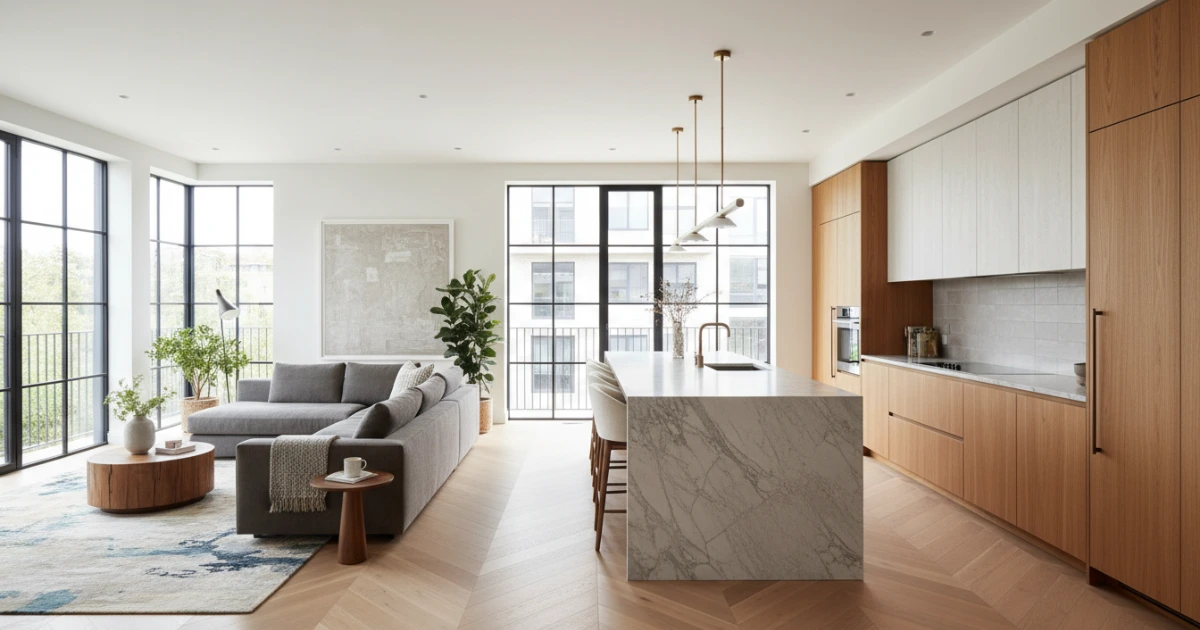
Kitchen flooring is a decision you live with for a long time. It covers a large surface area, takes constant foot traffic and spills, and sets the visual tone for the whole room. Getting it wrong is expensive to fix.
The good news is that the range of genuinely good options has never been wider. There are materials available now that were either too expensive, too fragile, or simply did not exist a decade ago.
We have covered 9 of the best options for modern kitchens in 2026. For each one, we explain what it is actually like to live with, not just how it looks in a showroom.
Wide Plank Hardwood
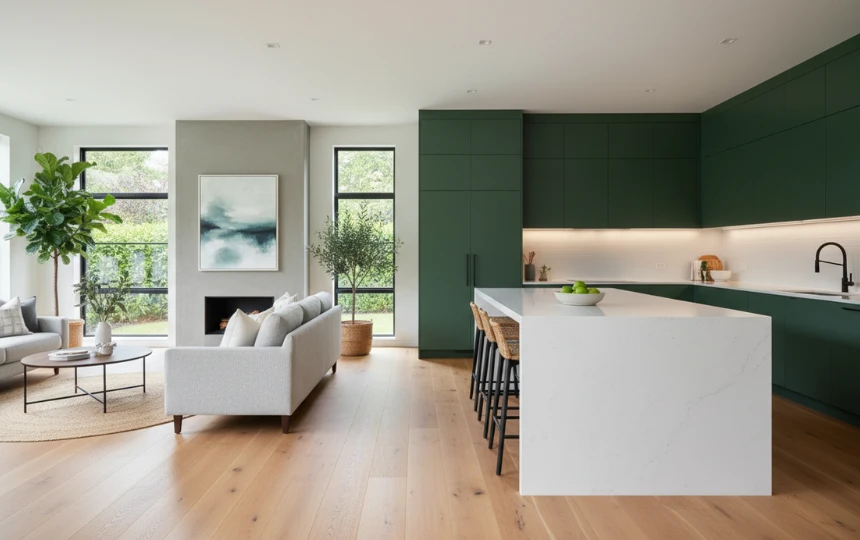
Wide plank hardwood is the floor that photographs best and feels best underfoot. There is nothing else quite like the warmth of natural wood in a kitchen.
The shift toward wider planks (5 inches and above, ideally 7 or more) is one of the clearest signals of current design taste. Narrow strip flooring reads as dated. Wide planks read as generous, considered, and expensive even when the actual cost difference is modest.
White oak is the most popular species right now. It has a calm, even grain that works in both contemporary and transitional kitchens. A matte or satin finish shows the wood’s natural character far better than a high-gloss finish, which tends to look plasticky over time and shows every scratch.
The honest concern with hardwood in kitchens is water. Standing water will damage it. Spills need to be wiped up promptly. If your household includes young children, very large dogs, or genuinely chaotic cooking habits, engineered wood is a more sensible choice (see idea 6). For everyone else, hardwood holds up fine with basic care.
Large Format Porcelain Tile
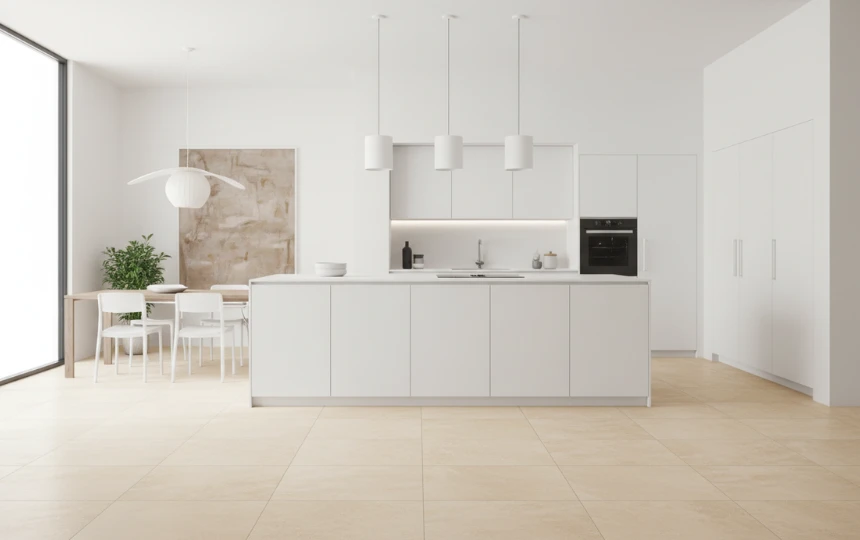
Large format porcelain tile is the most practical modern kitchen floor. It is essentially indestructible, water-proof, and requires almost no maintenance beyond regular mopping.
The format matters as much as the material. Tiles of 60×60 cm or larger (60×120 cm is particularly popular right now) have very few grout lines. That means less accumulation of grease and grime, easier cleaning, and a more continuous, expansive visual field that makes the kitchen feel bigger than it is.
Modern porcelain printing technology has made stone-effect tiles genuinely convincing. Warm cream travertine effects, honed concrete effects, and light oak wood effects are all available in large format porcelain. Many people cannot tell the difference from natural materials at normal viewing distance.
One important number to check: the PEI rating. It indicates abrasion resistance. For kitchen floors, specify PEI 4 or above. Lower-rated tiles are intended for walls and will wear visibly within a few years underfoot.
Herringbone Pattern Floor
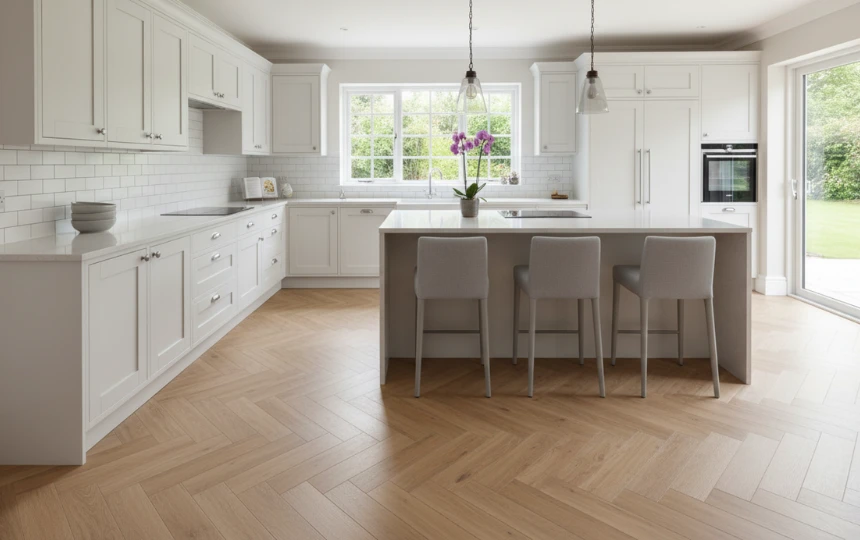
Herringbone is not a material. It is a laying pattern. But it deserves its own spot on this list because of how dramatically it changes the character of a floor.
The V-shaped zigzag creates directional energy that a straight-set floor simply does not have. It makes the floor feel designed rather than installed. And it works in almost any material: hardwood, engineered wood, porcelain tile, and even LVP can all be laid in herringbone.
In kitchens, herringbone works best with narrower boards or tiles rather than very wide planks. A 2.5-inch by 10-inch wood plank or a 10×30 cm tile emphasizes the pattern well. Very wide planks in herringbone can look busy rather than elegant.
It does cost more to install. The cutting and fitting time is significantly higher than a standard straight lay. Budget 20 to 30 percent more for labor on a herringbone installation. The visual payoff is significant enough that most people feel it is worth it.
Polished Concrete
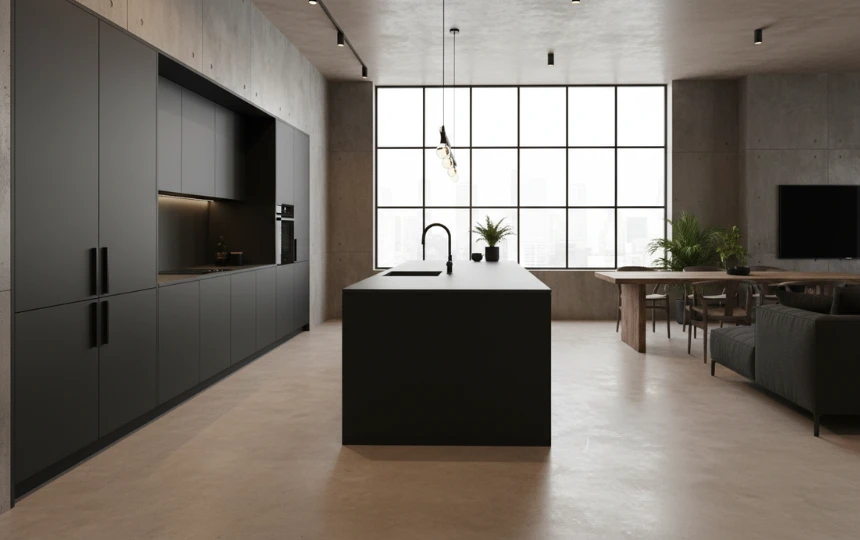
Polished concrete is the most seamless kitchen floor available. No grout lines, no tile joints, no pattern breaks. Just a continuous surface from one end of the room to the other.
It suits industrial, loft, and contemporary-minimalist kitchens better than traditional ones. In an open-plan space, concrete flowing uninterrupted from the kitchen through to the living area creates a visual calm that is hard to achieve with any other flooring material.
The practical reality: sealed concrete is not difficult to maintain, but it does require the right sealer applied correctly during installation. An epoxy or polyurethane topcoat makes it genuinely stain-resistant and easy to mop. Without proper sealing, concrete absorbs everything and stains permanently.
It is also cold underfoot in winter. Underfloor heating beneath a concrete slab is not a luxury in a colder climate. It is a necessity. Factor that into the budget from the start.
Terracotta Tile
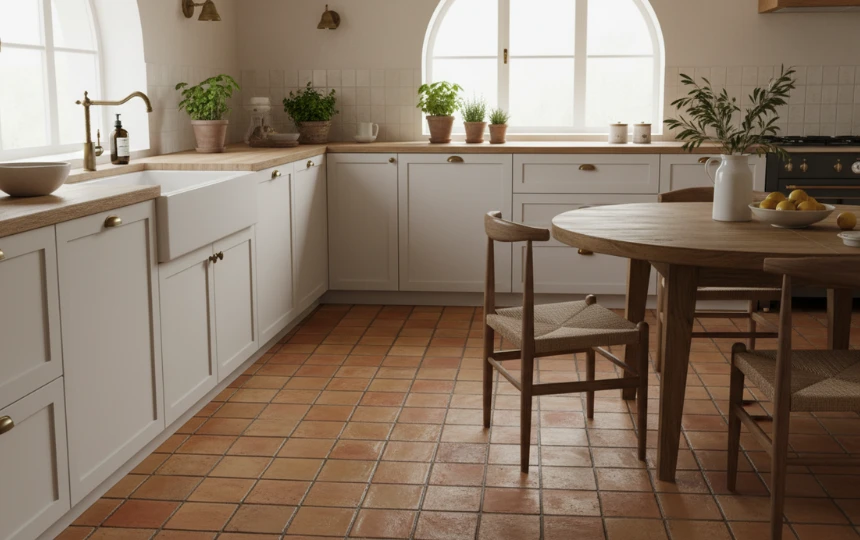
Terracotta tile has been used in kitchens for centuries. It keeps coming back because nothing else produces that particular quality of warmth and earthiness.
Handmade terracotta has a natural variation from tile to tile. The color shifts between burnt orange, warm rust, and sandy clay. No two tiles are identical. That irregularity is the point. It gives the floor a handcrafted quality that machine-made tiles cannot replicate.
The material is porous and requires sealing before use. A penetrating stone sealer applied before grouting and again after is sufficient. After that, maintenance is straightforward. Sweep regularly, mop with a pH-neutral cleaner, and reseal every two to three years.
Terracotta suits kitchens with a Mediterranean, farmhouse, or warm-contemporary feel. It works particularly well with white or cream cabinetry, brass fixtures, and natural wood accents. It is harder to make work in a very sleek, minimalist kitchen where the handmade variation can feel out of place.
Engineered Wood
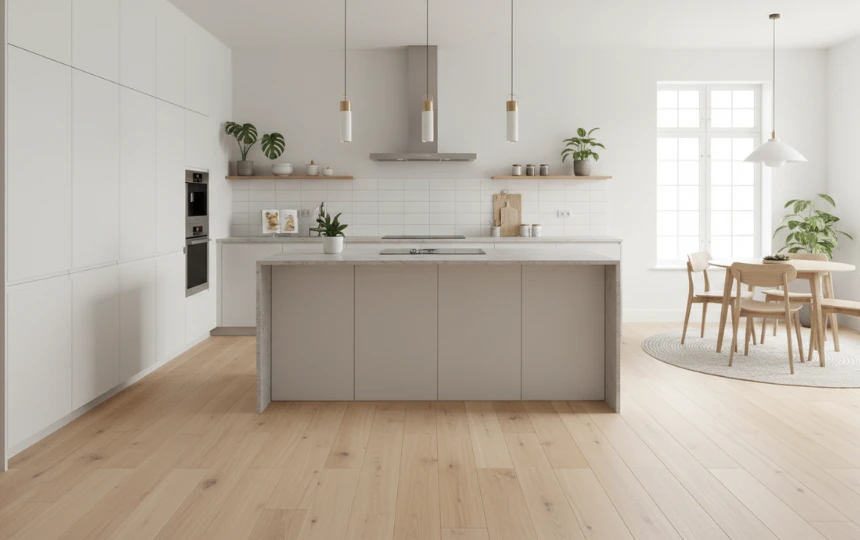
Engineered wood is solid hardwood’s more practical sibling. From a standing position, you cannot tell them apart. The top layer is real wood veneer. The base layers are plywood or HDF, which makes the whole board significantly more stable.
That stability matters in kitchens. Solid hardwood expands and contracts significantly with changes in humidity. In rooms where temperature and moisture fluctuate (as kitchens do), solid wood can cup, gap, or warp over time. Engineered wood handles those fluctuations without complaint.
It can also be installed over underfloor heating, which solid hardwood generally cannot. If radiant heat is part of the plan, engineered wood is the better choice.
The trade-off is that engineered wood can only be sanded and refinished once or twice, depending on the veneer thickness. Solid hardwood can be refinished many more times. For most households, that distinction is academic. Refinishing a kitchen floor is a project most people do once in thirty years, if ever.
Natural Stone
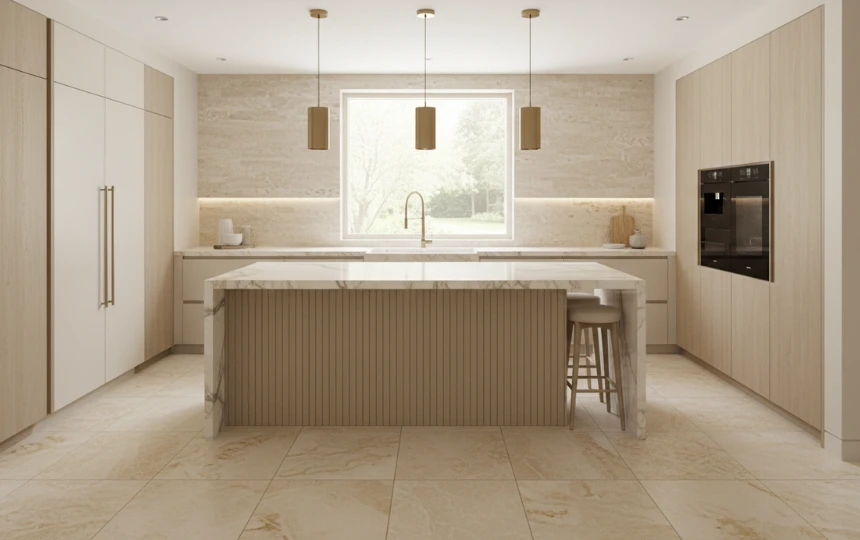
Natural stone floors have a weight and substance to them that no manufactured product fully replicates. Limestone, travertine, slate, and sandstone each bring a different character. All of them share the quality of looking genuinely better with age.
Honed finishes work better in kitchens than polished ones. Honed stone is matte, which hides scratches, shows less grime, and does not become dangerously slippery when wet. Polished stone in a kitchen is a maintenance nightmare and a slip hazard.
Limestone and travertine are the most popular choices for modern kitchens. They come in warm cream, honey, and walnut tones that suit contemporary interiors well. Slate offers a darker, more dramatic alternative for industrial and moody kitchen aesthetics.
Natural stone requires sealing before installation and resealing every one to two years. It is also cold underfoot without underfloor heating. Budget for both. Stone that is not properly sealed will absorb cooking oils, wine, and acidic liquids and stain permanently.
Encaustic Cement Tile
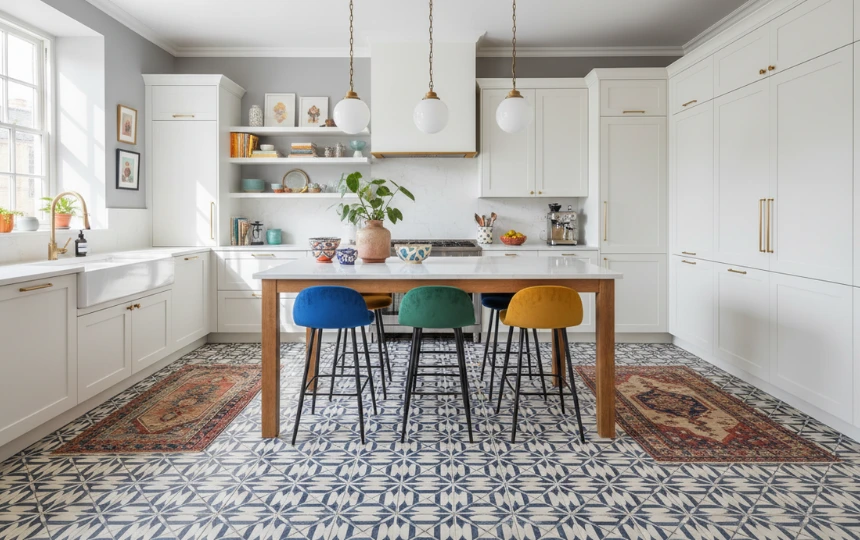
Encaustic cement tiles are the boldest flooring choice on this list. They are also the one most likely to make you genuinely excited to walk into your kitchen every morning.
Unlike glazed ceramic tiles, the pattern in encaustic tiles is pressed into the body of the tile itself during manufacturing. The color runs through the tile rather than sitting on the surface. This means chips and scratches do not reveal a different-colored body underneath. The pattern stays intact through decades of use.
Moroccan geometric patterns, Portuguese azulejo-inspired designs, Art Deco geometrics, and botanical patterns all work beautifully as kitchen floors. The key design rule is the same as it is for a patterned backsplash: if the floor is doing all the talking, the rest of the kitchen needs to be quiet. White or cream cabinets, plain countertops, simple hardware.
Encaustic tiles are porous and require sealing before and after installation. They also develop a patina over time that many people love. If you want a floor that looks exactly the same in twenty years as it did on day one, this is not the right choice. If you want a floor that tells the story of a kitchen being lived in, it is.
Luxury Vinyl Plank (LVP)
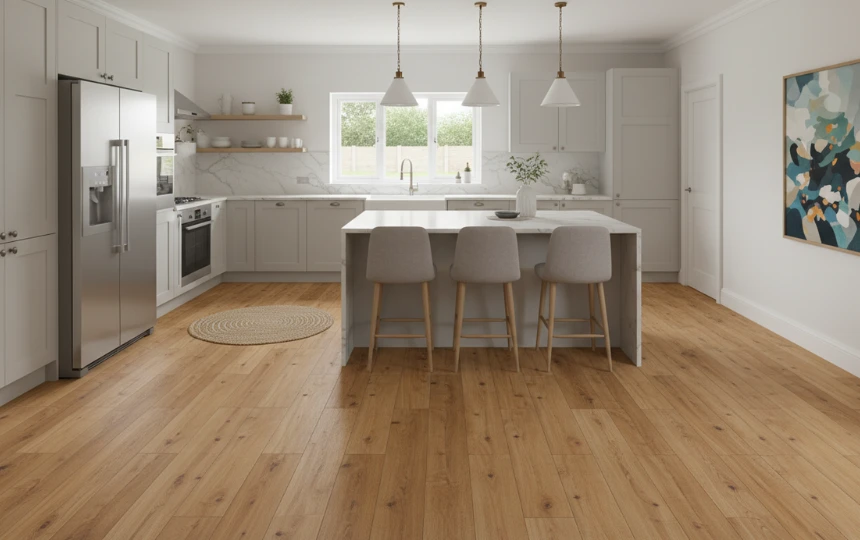
Luxury vinyl plank deserves a more honest conversation than it usually gets in design guides. It is often dismissed as a budget material. That dismissal misses a lot of genuinely good product.
The best LVP (from brands like Karndean, Amtico, and Moduleo) uses high-resolution digital printing and embossed textures that replicate wood and stone convincingly at normal viewing distances. It is 100 percent waterproof, scratch-resistant, warm underfoot, and significantly softer to stand on than tile or stone. For a kitchen where you spend long periods standing, that last point matters more than most flooring guides acknowledge.
It will not sand and refinish like hardwood. It will not gain the patina of natural stone over time. The look is fixed from day one. For some households, particularly those with young children, dogs, or high-traffic demands, those trade-offs are entirely acceptable given the dramatically lower cost and zero maintenance requirements.
If you are choosing LVP, buy the thickest wear layer you can afford. Look for 0.55mm wear layer as a minimum for a kitchen floor. Below that and it will show wear in high-traffic areas within a few years.
Kitchen Flooring: Material Comparison
Buyer’s Guide| Material | Durability | Water Resistance | Installed Cost/sqft | Best Kitchen Style |
|---|---|---|---|---|
| Wide Plank Hardwood | ★★★★☆ | Low | $10–$22 | Modern, Transitional |
| Large Format Porcelain | ★★★★★ | Excellent | $8–$20 | Minimalist, Contemporary |
| Herringbone (any material) | Varies | Varies | +20–30% labor | Any style, adds pattern |
| Polished Concrete | ★★★★★ | Excellent (sealed) | $10–$25 | Industrial, Loft |
| Terracotta Tile | ★★★☆☆ | Medium (sealed) | $8–$18 | Mediterranean, Farmhouse |
| Engineered Wood | ★★★★☆ | Medium | $7–$18 | Scandi, Warm Modern |
| Natural Stone | ★★★★★ | Medium (sealed) | $15–$40 | Luxury, Timeless |
| Encaustic Cement Tile | ★★★☆☆ | Low (porous) | $12–$28 | Eclectic, Bohemian |
| Luxury Vinyl Plank | ★★★★☆ | Excellent | $4–$10 | Family Kitchens, Any |
The Question That Narrows It Down Fast
Ask yourself: do you want a floor that looks the same in twenty years, or one that looks better? Materials like LVP and porcelain maintain their appearance precisely over time. Natural stone, hardwood, terracotta, and encaustic cement all develop a patina that many people love but others find hard to live with. Neither answer is wrong. But knowing which camp you fall into eliminates half the options on this list immediately.
Budgeting for a Full Kitchen Renovation?
Our renovation cost calculator helps you estimate total project costs including flooring, cabinets, countertops, and labor. Free and takes under a minute.
Calculate Your Budget →Choose the Floor Your Kitchen Actually Needs
Start with the practical requirements. How much water and traffic does this kitchen see? Is there underfloor heating? Are there children or large animals involved? The right answers to those questions will eliminate several options before aesthetics even enters the conversation.
Then look at what the rest of the kitchen is doing. A bold patterned floor needs quiet cabinetry around it. A plain large-format tile lets the cabinets and island take center stage. The floor does not need to be the hero. But it does need to be right.
Frequently Asked Questions About Kitchen Flooring
Large format porcelain tile is the most practical choice for most modern kitchens. It is waterproof, extremely durable, low maintenance, and available in formats that create a seamless, expansive floor with minimal grout lines. Wide plank hardwood or engineered wood is the best choice if warmth and natural character are the priority and the household can manage the slightly higher maintenance requirement. For families with young children or very high traffic, luxury vinyl plank is a genuinely good option that most design guides underrate.
Yes, with appropriate expectations. Solid hardwood handles occasional spills well if they are wiped up promptly. It does not handle standing water or frequent large spills. It will show wear over time in high-traffic areas, which many homeowners find adds to its character. Engineered wood is a more stable alternative that handles kitchen humidity fluctuations better than solid hardwood and can be installed over underfloor heating. If waterproofing is a priority, porcelain or LVP is the better choice.
Larger tiles generally work better in modern kitchens. A 60×60 cm tile is a practical minimum. 60×120 cm is the most popular format right now and creates a particularly seamless, contemporary look with very few grout lines. Smaller format tiles (like 10×10 cm mosaics) are harder to keep clean in a kitchen because the high grout-to-tile ratio means a lot of grout surface that accumulates grime. Larger tiles mean less grout, less cleaning, and a more open visual field.
In open-plan homes, yes. Using the same floor throughout an open-plan kitchen and living area creates visual continuity that makes both spaces feel larger and more connected. It also removes the awkward transition strip between two different materials at the threshold. If the spaces are separated by a wall or door, different floors can work well and allow each room its own character. The transition strip in a doorway is far less disruptive visually than one running through the middle of an open-plan space.
Kitchen flooring installation typically costs between $4 and $40 per square foot including materials and labor, depending on the material chosen. Luxury vinyl plank is at the lower end at $4 to $10 installed. Large format porcelain runs $8 to $20. Wide plank hardwood costs $10 to $22. Natural stone is typically $15 to $40 or more for premium materials. A herringbone laying pattern adds 20 to 30 percent to the labor cost regardless of the material. For a 200 square foot kitchen, total flooring costs typically range from $800 to $8,000 depending on the material.
Yes, particularly if you are installing tile, stone, or concrete. These materials are cold underfoot without it, which becomes genuinely unpleasant during winter months when you are standing at the counter for extended periods. Electric underfloor heating systems are relatively affordable to install and cost little to run under a small kitchen area. Hydronic (water-based) systems are more efficient for larger areas but require more installation work. Engineered wood and LVP are both compatible with underfloor heating. Solid hardwood generally is not.
Thank you for sharing these modern kitchen flooring ideas. The recommendations are both practical and visually appealing.