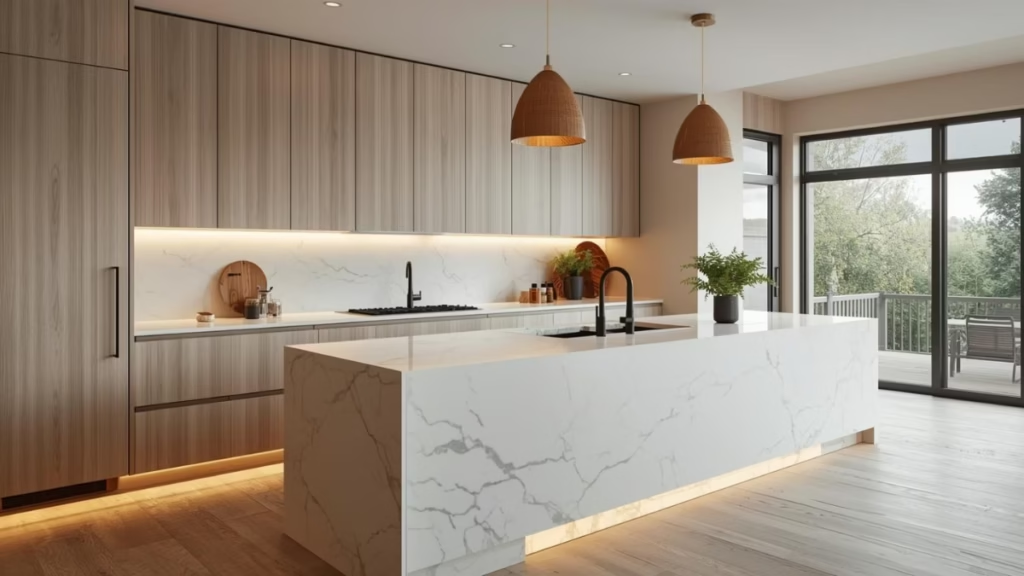
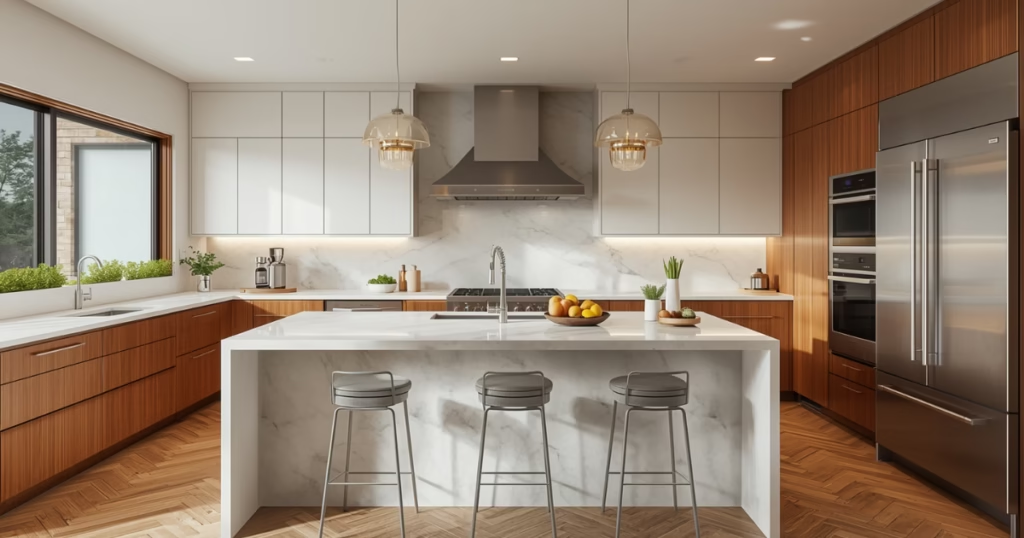
7 Modern Kitchen Vent Hood Ideas That Make a Statement
The range hood is the most overlooked design opportunity in the kitchen. It sits in one of the most prominent positions in the room. These 7 ideas show what is possible when you treat it as architecture.
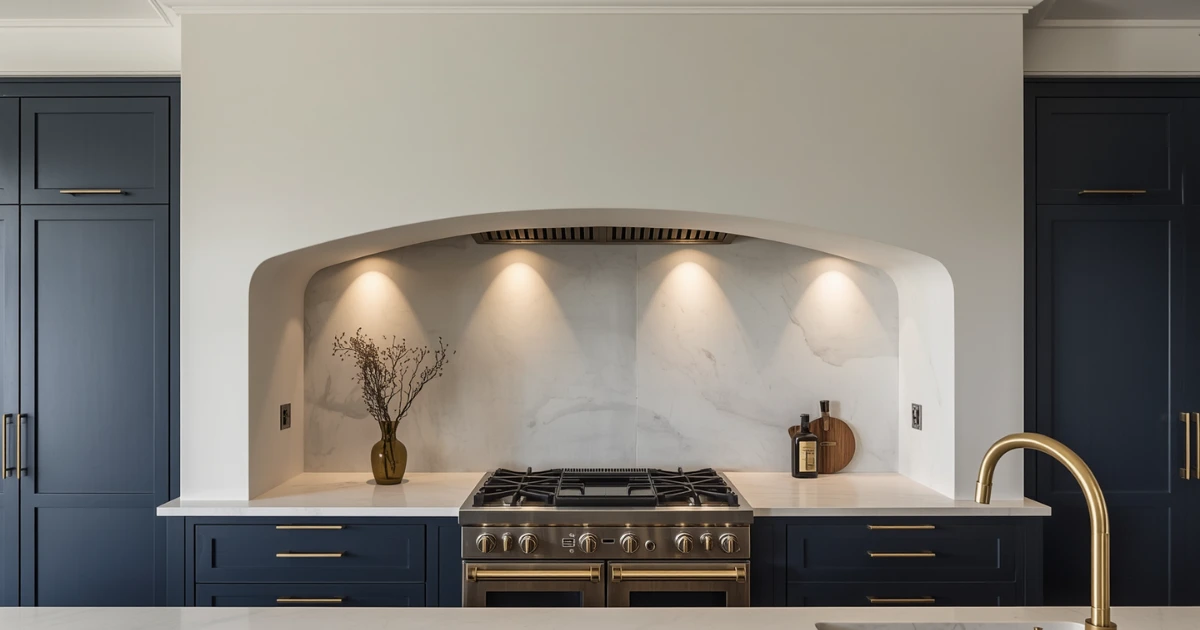
Most people choose a range hood by going to a showroom, picking the least offensive stainless steel option that fits the space, and moving on. The result is a hood that does its ventilation job adequately while contributing nothing to the design of the kitchen.
That is a missed opportunity. The range hood occupies 10 to 15 percent of the kitchen’s most visible wall. It sits at eye level. It is the thing people look at when they are standing at the island talking to whoever is cooking.
Treating the hood as a design element rather than a ventilation afterthought is one of the most impactful decisions you can make in a kitchen renovation. These 7 ideas cover the full range of what is possible.
Custom Plaster Hood
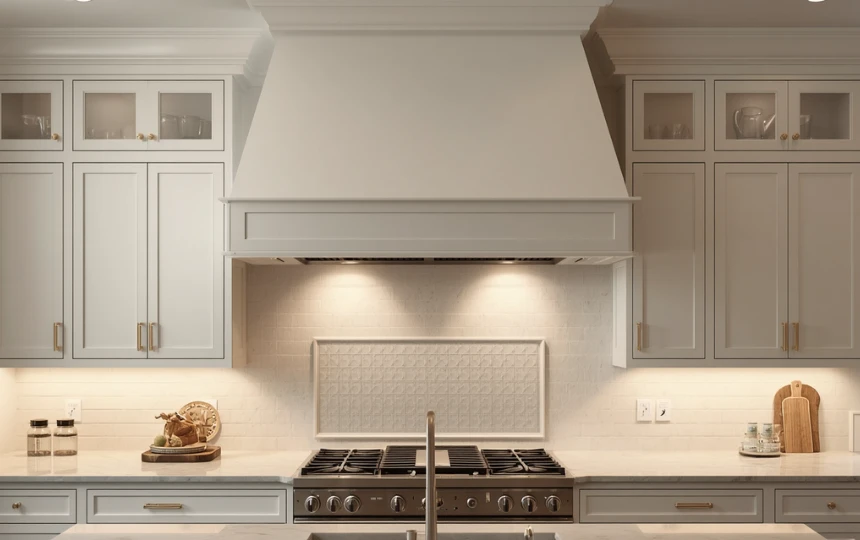
A custom plaster hood is the single most impactful design upgrade you can make to the cooking zone of a kitchen. Nothing else comes close for the visual authority it creates.
The plaster is built over a structural wood or metal frame and finished in a smooth or subtly textured coat. The result is a completely seamless, monolithic form that looks like it was carved from the architecture rather than installed as an appliance. Paint it the same color as the cabinetry for a unified look, or leave it in warm white plaster for contrast.
The hood insert (the actual ventilation mechanism) sits inside the plaster housing. Any quality insert with the right CFM rating will work. The exterior is entirely custom. Shape, size, and profile are up to you and your contractor.
This is a construction-stage decision. The plaster housing needs to be built before the kitchen is finished around it. Retrofitting a plaster hood into an existing kitchen is possible but significantly more disruptive. Budget $1,500 to $4,000 for the plaster hood construction, separate from the insert cost.
Integrated Cabinet Hood
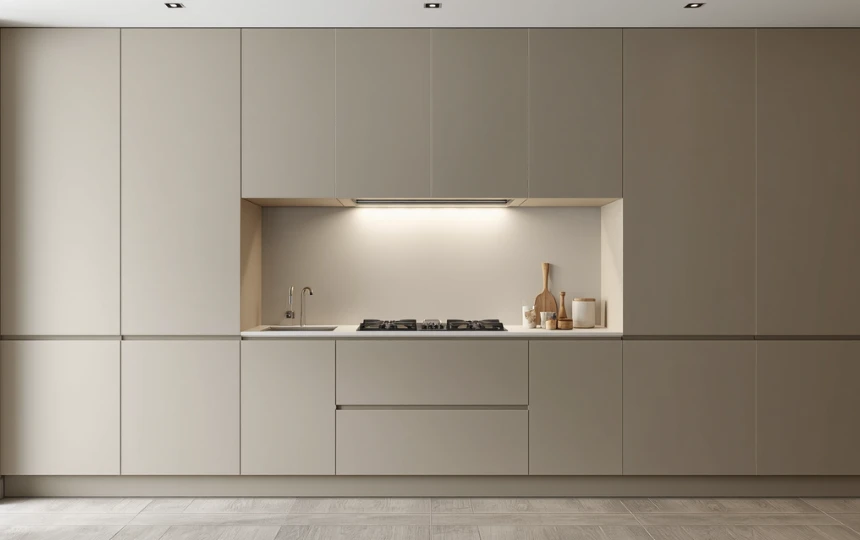
If the plaster hood is the most dramatic approach, the integrated cabinet hood is the most subtle. The ventilation mechanism sits behind cabinet panels that match the surrounding cabinetry exactly. From the outside, there is nothing to indicate a hood is there at all.
This suits minimalist and contemporary kitchens where the design philosophy is to hide everything that is not decorative. A wall of seamless cabinetry with no visible appliances, no visible handles, no visible hood. Just one continuous, architectural surface.
The practical requirement is a cabinet maker who can build the surround to accept the hood insert correctly, and a ventilation system with sufficient CFM capacity despite the restricted opening. Not all insert models work well in this configuration. Specify one designed for integrated installation.
This also works with floor-to-ceiling cabinet walls where the hood zone becomes simply another section of the vertical storage run. No one element draws attention. The whole wall is the design.
Copper or Unlacquered Brass Canopy
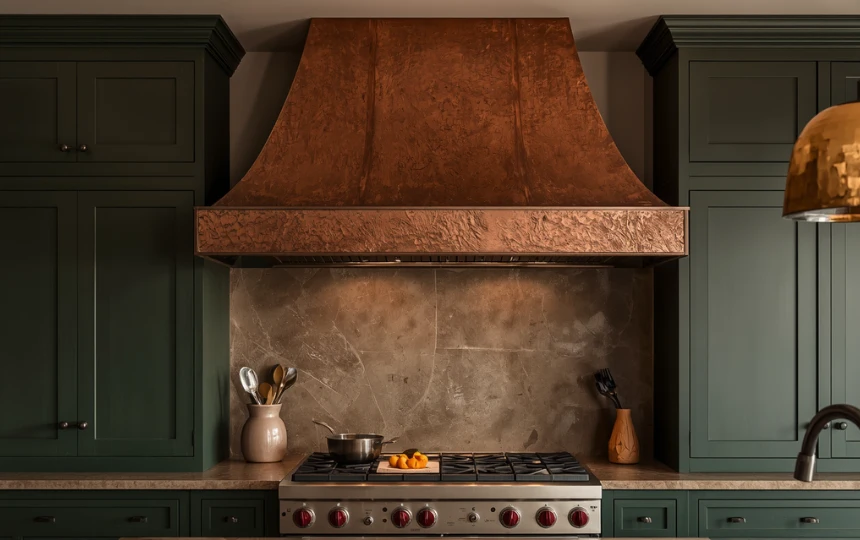
A hand-hammered copper or unlacquered brass hood canopy is one of the most characterful choices in kitchen design. It is a living material. It changes.
Unlacquered brass develops a warm, amber-to-dark patina over time as it oxidizes naturally. Copper moves from bright, salmon-toned new copper through to deep warm browns with hints of green at the edges. Both processes produce surfaces that look more interesting and more beautiful as they age, not less. That quality is rare in manufactured goods.
The visual weight of a metal canopy works best when the rest of the kitchen is substantial enough to hold its own alongside it. Deep green, navy, or charcoal cabinetry paired with a copper hood is one of the strongest kitchen combinations available. White cabinets can work too, but the hood needs to be proportionally significant to avoid looking like an afterthought against a pale background.
Custom copper hoods are typically hand-fabricated by specialist metalworkers. Budget $2,000 to $8,000 depending on size and complexity. The craftsmanship is visible in every surface and the result genuinely cannot be replicated at a lower price point.
Blackened Steel Chimney Hood
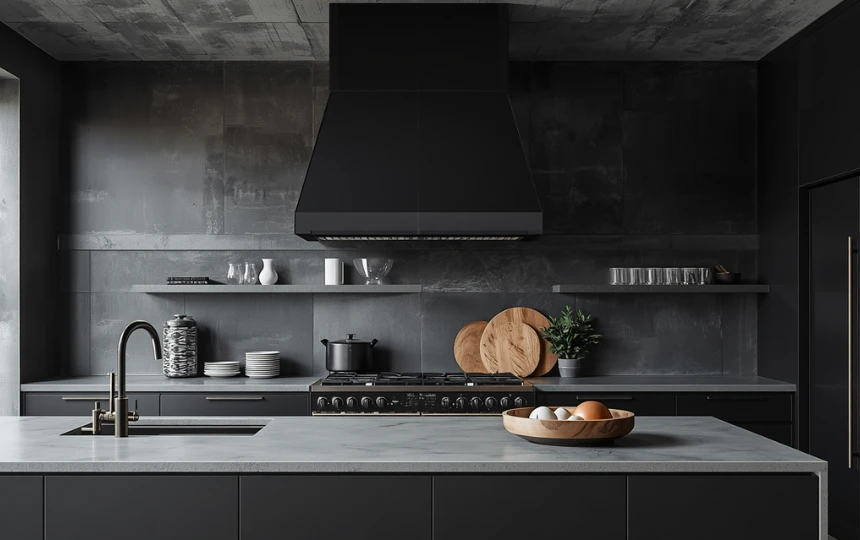
A blackened or matte black steel chimney hood is one of the most decisive choices in kitchen design. It does not try to blend in. It does not pretend to be something else. It is exactly what it is, and it makes no apologies for it.
The straight, geometric form of a chimney hood suits contemporary, industrial, and loft kitchens particularly well. Powder-coated matte black steel looks sharp against white cabinetry and extraordinary against dark cabinetry where the tonal contrast is more subtle. Against charcoal or navy cabinets, a black chimney hood creates a depth and unified darkness that feels genuinely sophisticated.
Many manufacturers now offer well-designed chimney hoods in matte black finishes at reasonable price points. Elica, Faber, and Bertazzoni all produce options worth considering. The difference between a well-proportioned hood with clean welds and a poorly made one is clearly visible. Look at the joint quality and the consistency of the powder coat before buying.
This is also one of the more affordable statement hood options. A quality matte black chimney hood from a good manufacturer runs $400 to $1,500. The visual impact is disproportionate to the cost.
Downdraft Ventilation
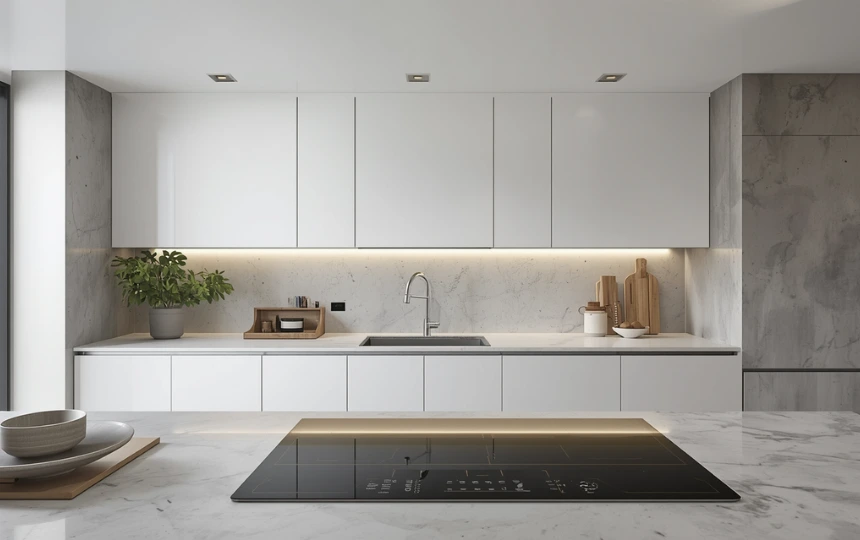
Downdraft ventilation removes the range hood from the equation entirely. The ventilation system is integrated directly into or beside the cooktop surface, extracting cooking vapors downward rather than drawing them upward into an overhead hood.
The result is a completely clean wall and ceiling above the cooking zone. No hood, no chimney, no visual interruption. For kitchens where the cooking zone faces a window, or where the open-plan layout makes a hood feel imposing, downdraft offers a genuinely elegant solution.
Systems like the Bora Pure and ATAG integrated downdraft have become the benchmark for this category. The extraction performance is genuinely comparable to a well-sized overhead hood for most domestic cooking situations. Very high-heat or heavy wok cooking may still benefit from overhead extraction, but for standard home cooking, downdraft works well.
The cost premium is significant. A quality downdraft system runs $1,500 to $4,000 for the extraction unit alone, typically integrated with a flush-mounted induction cooktop. The total cooking zone investment is higher than a standard hood and cooktop combination, but the design payoff for the right kitchen is substantial.
Arched Plaster Hood
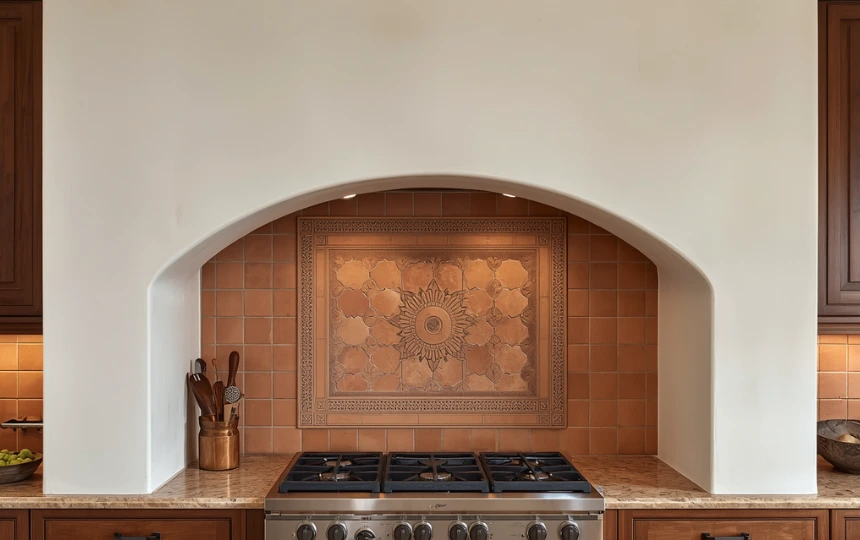
The arched plaster hood is a variation on the custom plaster hood with one significant difference. The base of the hood features a rounded arch rather than a straight horizontal line. That curve changes everything.
Where a straight-bottomed plaster hood reads as architectural and contemporary, an arched hood reads as organic, warm, and deeply rooted in Mediterranean and Spanish colonial design traditions. It suits farmhouse, Mediterranean, and warm-contemporary kitchens far better than any stainless or metal hood could.
The arch creates a natural alcove above the range that invites tile work, stone, or additional plaster detailing inside it. Many designers fill this alcove with handmade ceramic tiles or zellige, which creates a beautiful contrast between the curved plaster exterior and the textured tile interior.
Like all custom plaster hoods, this requires building at the construction stage. The arch requires more skilled plastering work than a straight-sided hood and will cost slightly more as a result. Budget $2,000 to $5,000 for construction depending on size and complexity of the arch detail.
Slim Stainless Steel Canopy: The Modern Classic
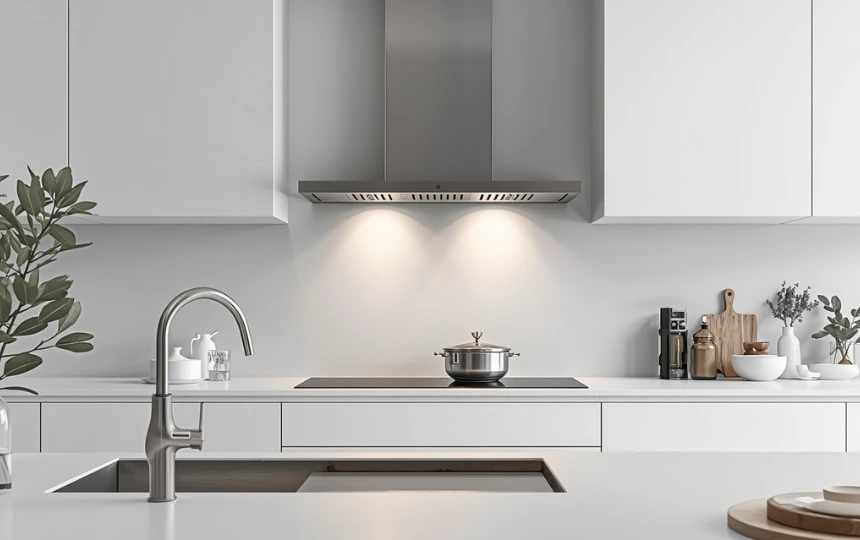
Not every kitchen needs a statement hood. For kitchens where the design philosophy is restraint and the hood is meant to disappear rather than draw attention, a slim, well-proportioned stainless canopy is entirely the right choice.
The key is proportions and finish quality. A cheap stainless hood with thick edges, visible screws, and a brushed finish that does not match the rest of the kitchen’s metalwork looks exactly like what it is. A slim canopy with clean, thin edges, a consistent brushed or matte finish, and the right width-to-depth ratio looks precise and considered.
Brands like Smeg, Bosch, and Neff make slim canopy hoods with genuinely good design at accessible price points. The hood should be at least as wide as the cooktop, ideally wider. A hood that is narrower than the cooking surface does not capture rising vapors effectively and looks undersized.
For Scandi, Japanese-minimalist, and very contemporary kitchens where every element is stripped back to its essential form, a slim stainless canopy is the intellectually honest choice. It does not pretend to be architecture. It is a well-designed appliance, and that is enough.
CFM and Sizing: What You Actually Need to Know
Before You BuyThe design of the hood matters. So does the ventilation performance. A beautiful hood that does not actually clear cooking vapors is a frustration. Here is the straightforward version of what to specify.
| Cooktop Type | Min CFM Recommended | Hood Width | Min Height Above Cooktop |
|---|---|---|---|
| Standard 30″ gas range | 600 CFM | 30″ or wider | 30 inches |
| High-BTU gas range (professional) | 900–1200 CFM | Same width or wider | 30–36 inches |
| Standard induction or electric | 400–600 CFM | Same width or wider | 24–30 inches |
| Island cooktop (any type) | Add 25% to above | 6″ wider than cooktop on each side | 30–36 inches |
| Downdraft system | 600–800 CFM minimum | Built into cooktop | N/A |
The Two Things Nobody Mentions About Range Hoods
First: ducted is always better than ductless. A recirculating hood that filters and returns air to the kitchen removes some grease and odors but does nothing for moisture and heat. A properly ducted hood that vents outside removes everything. If your kitchen renovation involves any structural work, run a duct to the exterior. Second: noise matters as much as CFM. A hood rated at 600 CFM that runs at 70 decibels is unusable at full power during a dinner party. Check the noise rating (sone level) when comparing hoods. Aim for 3 sones or below at your primary cooking speed setting.
Make the Hood Part of the Design, Not an Afterthought
The range hood gets specced last in most kitchen renovations. It gets specced first in the best ones.
Decide on the hood design early, because it influences everything around it. A plaster hood needs structural framing. A downdraft needs a duct below the floor. An integrated cabinet hood needs the cabinet maker to build around it. None of these can be easily retrofitted.
Whatever you choose, make sure the CFM rating matches your cooktop. A beautiful hood that cannot actually clear steam and cooking vapors is a disappointment every time you use the kitchen.
Frequently Asked Questions About Kitchen Range Hoods
Custom plaster hoods are the most sought-after choice in contemporary kitchen design right now, particularly in warm white or matched-to-cabinet colors. Integrated cabinet hoods are popular in minimalist kitchens where the goal is a seamless, appliance-free aesthetic. For accessible price points with strong design, slim matte black chimney hoods and brushed stainless canopy hoods remain consistently popular choices across a wide range of kitchen styles.
For a standard 30-inch gas range, 600 CFM is the recommended minimum. For a high-BTU professional-style range, aim for 900 to 1,200 CFM. For induction or electric cooktops, 400 to 600 CFM is typically sufficient. Island hoods need approximately 25 percent more CFM than wall-mounted hoods because the lack of surrounding walls means vapors spread more freely before the hood can capture them. Always choose a hood slightly larger in CFM than you think you need. Running a larger hood at lower speeds is quieter and more effective than running a smaller hood at full power.
Ducted is always the better option when it is possible. A ducted hood vents air, grease, moisture, and cooking odors completely out of the kitchen and home. A ductless or recirculating hood passes air through charcoal filters and returns it to the kitchen. It removes some grease and odors but does nothing for moisture or heat, and the filters require regular replacement. If your kitchen renovation involves any wall or ceiling work, run a duct to the exterior. The performance difference is significant.
A range hood should be at least as wide as the cooktop below it, and ideally 3 to 6 inches wider on each side. A 30-inch cooktop works with a 30-inch hood at minimum, but a 36-inch hood captures vapors more effectively because cooking steam and grease spread slightly beyond the cooktop edge before rising. For island hoods, the extra width on each side is even more important because there are no surrounding walls to contain the rising vapors.
The standard recommendation is 30 inches above a gas cooktop and 24 to 30 inches above an electric or induction cooktop. The closer the hood is to the cooktop, the more effectively it captures rising vapors. However, it also needs to clear the cook’s head comfortably during use. 30 inches is the practical minimum for most households. Higher than 36 inches and the hood’s effectiveness decreases noticeably for most residential CFM ratings. Custom plaster hoods often sit at 30 to 33 inches above the cooking surface for this reason.
Yes, but it is a significant renovation rather than a simple swap. Downdraft systems require a duct to run downward through the cabinet below the cooktop and then either through the floor (in a single-story home or over a basement) or horizontally through the kick space and wall. For kitchens on upper floors with concrete construction below, this can be very complex and expensive to retrofit. It is best planned at the kitchen design stage. If you are doing a full renovation, a downdraft system is entirely feasible. As a retrofit to an existing kitchen, get a specialist assessment before committing.