7 Modern Kitchen Rug Ideas That Add Warmth Without the Mess
A kitchen rug is one of the cheapest ways to change how a room feels. It is also one of the easiest things to get wrong. Here is how to get it right.
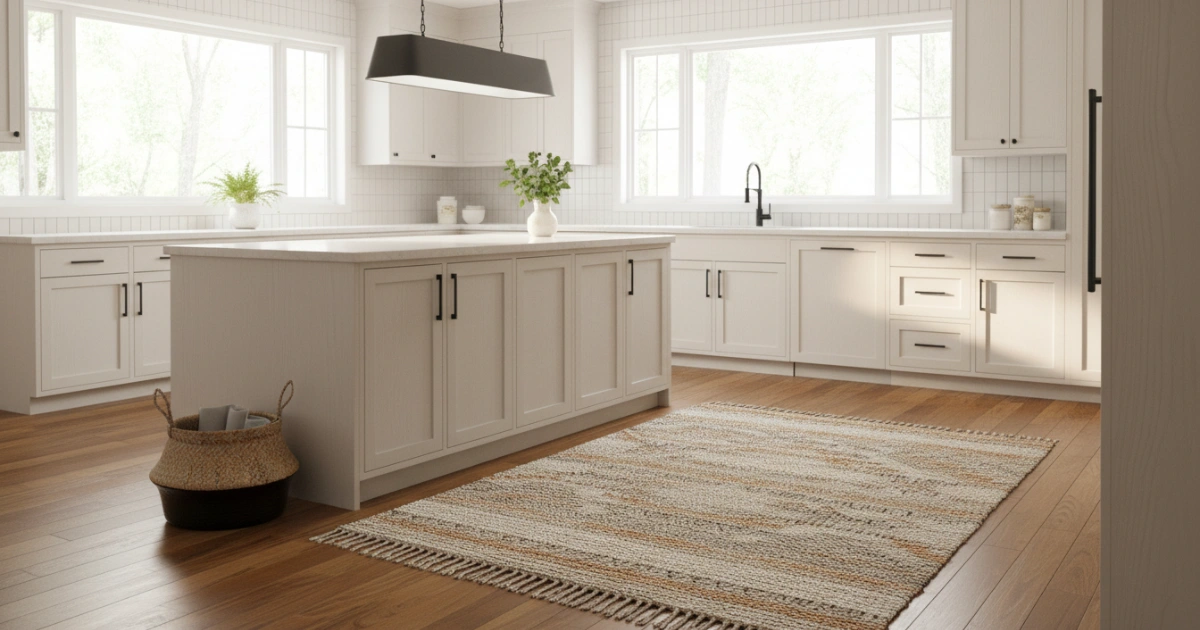
Most kitchen design conversations focus on what is fixed: the cabinets, the countertops, the backsplash. A rug is different. It costs a fraction of any of those things and you can change it whenever you feel like it.
That makes it one of the most genuinely low-risk ways to add warmth, color, texture, and personality to a kitchen. And yet most people either skip it entirely or choose something they end up regretting within six months.
The reason is usually one of two things. Wrong material for a kitchen environment. Wrong size. These 7 ideas cover both, alongside the styles and looks that are actually working in modern kitchens right now.
Washable Cotton Flatweave
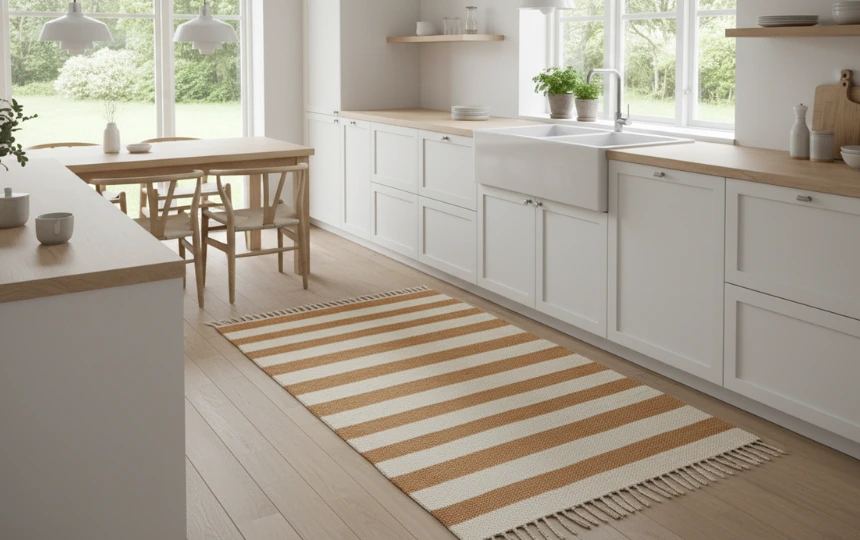
If you want one rug that covers every practical requirement for a kitchen, this is it.
A washable cotton flatweave is machine washable, low pile (so no tripping hazard and no catching on cabinet doors), reasonably priced, and available in enough colors and patterns to suit almost any kitchen aesthetic. It is the most sensible kitchen rug material available.
The flatweave construction means spills sit on the surface rather than soaking deep into pile. Wipe up what you can, throw it in the wash for the rest. For a surface that gets daily exposure to cooking splashes and foot traffic, that is genuinely important.
In terms of style, simple stripes and solid colors in warm neutrals work best. Cream, oatmeal, warm white, and soft sage all photograph well and suit the widest range of kitchen color schemes. Avoid very dark colors in a kitchen. They show flour, crumbs, and light-colored debris more than lighter tones do.
Natural Jute or Sisal
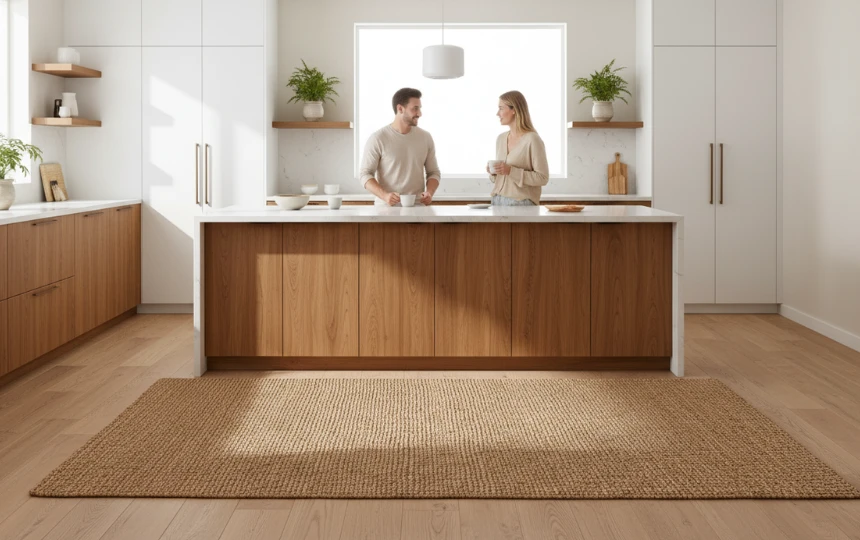
Jute and sisal rugs have an organic warmth that cotton and synthetic rugs simply cannot replicate. The natural fiber has a visual texture that looks genuinely handmade and introduces an earthy, grounded quality to the kitchen.
They suit warm minimalist, Japandi, farmhouse, and Mediterranean kitchens particularly well. Against light oak or white oak flooring, a jute rug in honey or natural tones creates a layered, warm material story that feels completely at home.
The trade-off is practical. Jute is not the easiest material to clean. It does not respond well to large amounts of water. Spot cleaning works for most spills. For a household that has young children, large dogs, or genuinely chaotic cooking sessions, a washable cotton flatweave (idea 1) is the more realistic choice.
That said, jute holds up well to dry messes. Crumbs, dust, and dry debris sweep or vacuum out easily. For most adult households with normal kitchen habits, jute is perfectly manageable and looks far better than synthetic alternatives at the same price point.
Bold Pattern Runner
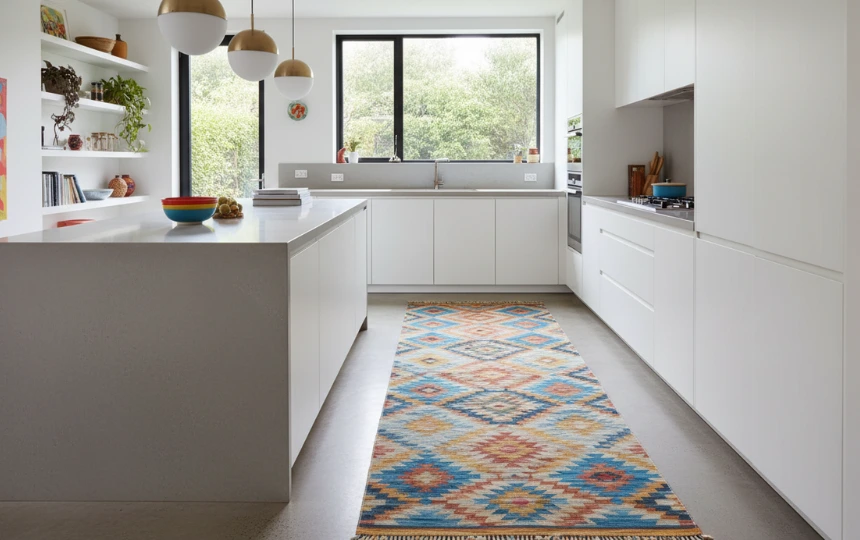
A kitchen with very neutral cabinetry and countertops is a blank canvas. A bold pattern runner is one of the most affordable ways to use that canvas.
Geometric patterns, Moroccan-inspired prints, and abstract designs all work well in kitchen runners. The format is naturally suited to the long, narrow zone between an island and the perimeter cabinets, or along the length of a galley kitchen.
The design rule is simple and consistent. If the rug has a lot to say, everything around it needs to be quiet. White or cream cabinets, plain countertops, simple hardware. One bold thing at a time. A bold rug in front of bold cabinets in front of a bold backsplash is too much. It cancels itself out.
For a kitchen where you want personality but cannot or do not want to commit to a permanent change like colored cabinets or a patterned backsplash, a bold runner achieves a similar effect at a fraction of the cost and zero permanence.
Striped Cotton Runner
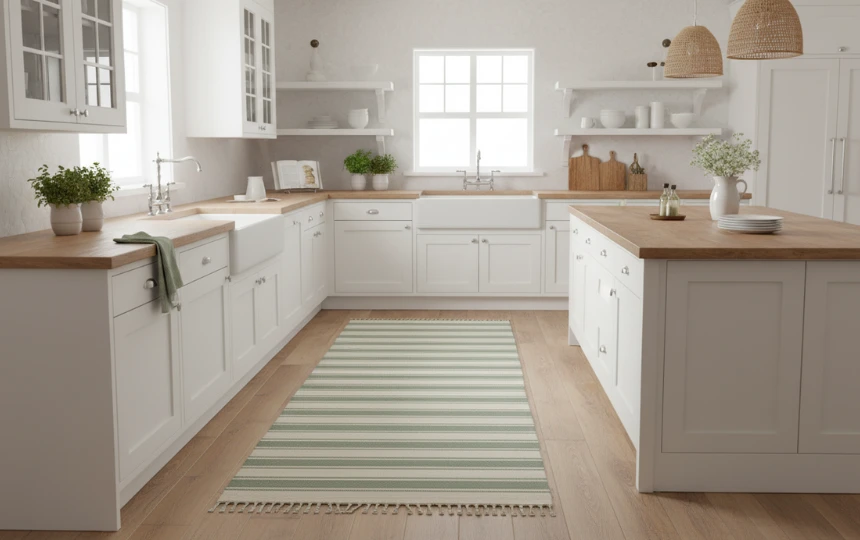
Stripes are the safest pattern choice for a kitchen rug. They are directional, clean, and compatible with almost every kitchen style from contemporary to farmhouse to transitional.
A cotton runner in classic ticking stripes, wide block stripes, or a subtle tone-on-tone stripe adds just enough visual interest to make the floor feel finished without demanding attention the way a bold geometric pattern does.
Navy and white, sage and cream, terracotta and natural, and charcoal and oatmeal are the combinations working best in modern kitchens right now. The stripe direction matters too. Running the stripes along the length of the runner emphasizes the length of the kitchen and suits galley layouts. Running them across the width creates a wider visual effect, which helps in shorter kitchens.
Most striped cotton runners are machine washable. Check before buying. If it is not machine washable, it is the wrong choice for a kitchen regardless of how much you like the look.
Moroccan or Beni Ourain Style
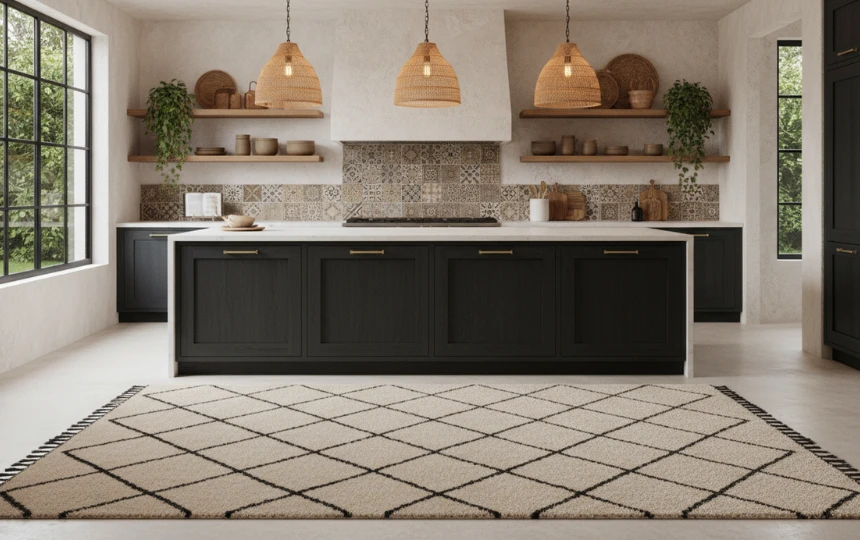
Beni Ourain rugs from the Atlas Mountains of Morocco have a very specific aesthetic. Cream or ivory wool ground with simple, irregular geometric patterns in black or dark brown. They are handwoven, which means no two are exactly alike.
They have appeared in kitchen design content so frequently over the past few years that the look has entered the mainstream. That is not a reason to avoid them. The combination of warm cream pile, natural wool texture, and simple geometric pattern works in contemporary, Japandi, and eclectic kitchens equally well.
Authentically handmade Beni Ourain rugs are expensive and not particularly practical in a kitchen. Pile rugs in general are harder to keep clean than flatweaves. A Beni Ourain-inspired flatweave or low-pile printed rug achieves a very similar visual effect at a much lower price point and with far better cleanability.
Place it in front of the island rather than in the main traffic zone between the island and perimeter cabinets. The island zone sees less foot traffic and more visual attention, which is the right situation for a rug with genuine character.
Solid Color Low-Pile Rug
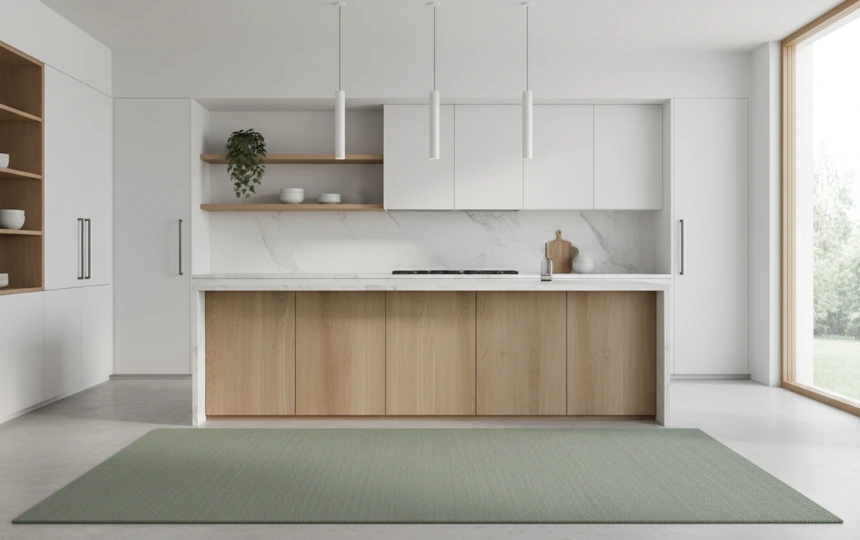
Sometimes a solid color is exactly the right choice. Not everything needs a pattern.
A solid low-pile rug in a carefully chosen color can do something a patterned rug cannot. It introduces a block of color to the kitchen floor without adding visual complexity. In a kitchen with interesting cabinetry, a striking backsplash, or statement hardware, a solid rug keeps the floor calm while still warming the space.
Color choice matters here more than in a patterned rug, where the pattern itself carries the visual interest. Sage green, dusty terracotta, warm ochre, and deep navy all work beautifully as accent colors on a kitchen floor. Pick up a tone from elsewhere in the kitchen. A sage rug in a kitchen with sage green lower cabinets. A terracotta rug in a kitchen with terracotta zellige tile. It connects the floor to the room in a way that feels intentional rather than coincidental.
For pile height, stay at or below 0.5 inches. Higher pile in a kitchen accumulates crumbs, is harder to vacuum clean, and creates more of a trip hazard near cabinet doors.
Anti-Fatigue Mat as a Design Choice
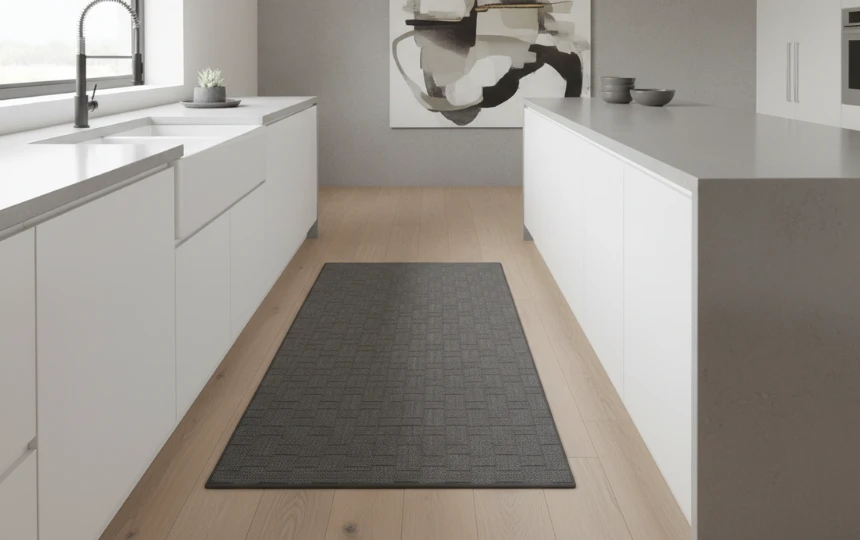
Anti-fatigue mats get dismissed as purely functional. Some of them deserve that dismissal. But the best ones are designed well enough to sit alongside considered interiors without looking out of place.
If you spend long periods standing at the kitchen sink or the stove, an anti-fatigue mat makes a real physical difference. The cushioned surface reduces pressure on feet, knees, and lower back. For anyone who cooks seriously or washes up daily, it is one of those things that once you have used it, you cannot go back.
Brands like Topo by Ergodriven and the Sagaform collection produce anti-fatigue mats with genuinely good design. They are available in dark slate, charcoal, black, and warm grey finishes that work in contemporary and minimalist kitchens without the garish colors and busy patterns that define most of the category.
Place one in front of the sink and one in front of the range. Keep them to the zones where you actually stand for long periods. They do not need to cover the whole kitchen to do their job effectively.
Kitchen Rug Sizing and Buying Guide
Before You BuyThe two mistakes people make most often are choosing the wrong size and choosing the wrong material. Here is how to avoid both.
| Kitchen Zone | Recommended Size | Best Material | Avoid |
|---|---|---|---|
| In front of sink | 2×3 ft or 2×4 ft runner | Washable cotton, anti-fatigue mat | Thick pile, wool |
| In front of island | 4×6 ft or 5×8 ft area rug | Jute, low-pile cotton, flatweave | High pile, shag |
| Galley kitchen center | 2.5×8 ft or 2.5×10 ft runner | Cotton flatweave, striped runner | Wide area rug (blocks traffic) |
| Open-plan kitchen zone | 6×9 ft or 8×10 ft area rug | Jute, flatweave, low pile | Very high pile (crumb trap) |
| In front of range | Anti-fatigue mat, 2×3 ft | Anti-fatigue mat, washable cotton | Synthetic pile near open flame |
The Rule Nobody Tells You About Kitchen Rug Size
The most common mistake is choosing a rug that is too small. A 2×3 foot rug in a large kitchen looks like a postage stamp. In front of an island, you want enough rug that all four feet of the bar stools sit on it when they are pulled out slightly. In a galley kitchen, the runner should cover most of the length of the run, not just one section of it. When in doubt, go one size larger than you think you need. You can always edit a rug down visually with furniture placement. You cannot make a too-small rug look right.
Start With the Material, Then Choose the Look
A kitchen rug that looks beautiful but cannot handle the environment it is placed in is a frustration waiting to happen. Get the material right first. Machine washable for high-traffic or family kitchens. Jute or flatweave for calmer households that want natural texture. Anti-fatigue mat for the zones where you spend the most time standing.
Once you have the right material, choosing the look is straightforward. Match the rug’s color or tone to something already in the kitchen. Keep the pattern simple if the kitchen has a lot happening elsewhere. Go bold if the kitchen is calm and needs a focal point.
Frequently Asked Questions About Kitchen Rugs
Yes, when chosen carefully. A rug adds warmth, cushioning underfoot, and personality to a kitchen. The key is choosing the right material. Machine washable cotton flatweaves handle kitchen spills and traffic well. Jute works in less chaotic kitchens. High-pile wool and shag rugs are poor choices for kitchens because they trap crumbs and are difficult to clean thoroughly. With the right material and size, a kitchen rug is one of the most effective and low-cost ways to improve how a kitchen feels.
A machine washable cotton flatweave is the most practical choice for most kitchens. It handles spills well, sits flat without becoming a trip hazard, and can be cleaned properly rather than just surface-wiped. Natural jute and sisal are good alternatives for households with moderate traffic and the willingness to spot-clean. For zones where you stand for long periods, an anti-fatigue mat from a brand that takes design seriously is the most functional choice. Avoid high-pile, shag, and wool rugs in kitchen environments.
In front of a sink, a 2×3 or 2×4 foot runner is usually right. In front of an island, a 4×6 or 5×8 foot area rug works well for most island sizes. The bar stool legs should sit on the rug when the stools are pulled out slightly. In a galley kitchen, a runner should be 2 to 2.5 feet wide and long enough to cover most of the working length of the kitchen. The most common mistake is going too small. When in doubt, choose the larger option.
The most effective positions are in front of the sink, in front of the island (if you have one), and along the length of a galley kitchen. In open-plan kitchens, a larger area rug helps define the kitchen zone without walls. Avoid placing rugs directly in front of the range if they are not rated for proximity to heat or if they are made from synthetic fibers. Anti-fatigue mats are specifically designed for the range and sink zones where you stand longest.
Yes, with some caveats. Jute handles dry messes well and vacuums easily. It does not handle large amounts of liquid as well as cotton because it is a natural fiber that absorbs moisture slowly. Spot cleaning works for most kitchen spills if done promptly. A jute rug is a realistic choice in kitchens with moderate traffic and adult households. For kitchens with young children, large dogs, or very frequent liquid spills, a machine washable cotton flatweave is the more practical option.
Yes, always. A non-slip rug pad serves two purposes. It prevents the rug from sliding, which is a safety issue on hard kitchen floors. And it adds a small amount of cushioning underfoot, which makes standing at the counter more comfortable. Even rugs that advertise a non-slip backing benefit from a proper rug pad. Kitchen floors are often sealed or waxed, which can reduce the grip of even rubberized backings over time. A thin felt and rubber combination pad works well on most kitchen floor types without damaging the finish.