40 Modern Kitchen Ideas That Will Inspire Your Next Remodel
From waterfall islands and bold backsplashes to smart appliances and warm minimalist palettes — curated ideas for every style and budget, with expert advice from our design team.
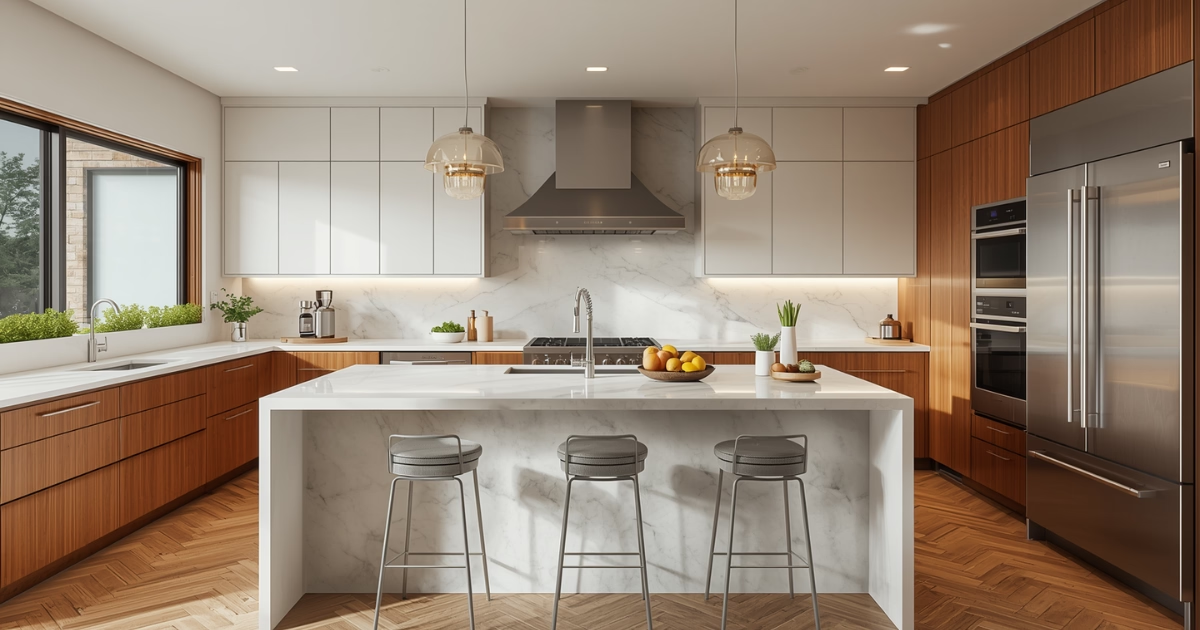
The kitchen is no longer just where meals get made — it’s the room that sets the tone for your entire home. Whether you’re planning a full gut renovation or a targeted refresh, the right modern kitchen ideas can transform a purely functional space into a place you genuinely love to be in.
We’ve spent months compiling, vetting, and testing these 40 ideas — drawing on input from interior designers, renovation contractors, and real homeowners who’ve been through the process. Each idea includes a description of what makes it work, who it’s best suited for, and practical tips for executing it well. No filler, no vague inspiration — just real, actionable ideas.
Whether your kitchen is 80 square feet or 800, open-plan or galley, there’s something here for you.
Not sure which modern kitchen style fits your home? Take our 2-minute quiz and get a personalized design direction.
Cabinetry & Storage Ideas
Ideas 1–5Handleless Flat-Front Cabinetry
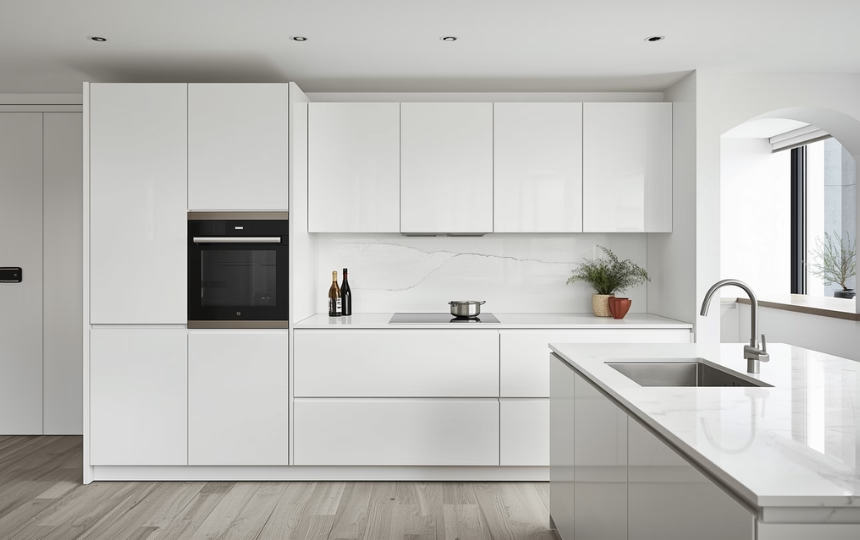
Nothing says “modern kitchen” more immediately than a wall of handleless, flat-front cabinets. This style strips away visual clutter and allows the materials — whether painted MDF, lacquer, or natural wood veneer — to speak entirely on their own. Push-to-open mechanisms or integrated J-pull channels keep the profile razor-thin. Best suited to homeowners who favor the Scandi or minimalist aesthetic, this approach works especially well when cabinet fronts extend floor to ceiling, eliminating the awkward gap above the upper cabinets and making ceilings feel taller. Choose matte finishes over gloss to avoid fingerprint visibility and to maintain that sophisticated, low-key look.
Two-Tone Cabinetry: Dark Lowers, Light Uppers
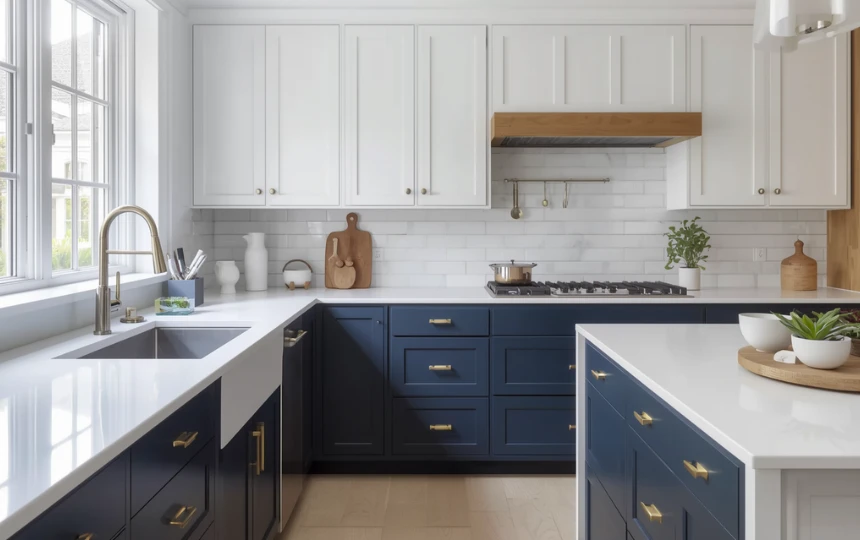
Two-tone cabinetry has graduated from trend to design standard — and for good reason. Pairing darker lower cabinets with lighter uppers grounds the kitchen visually, mimics furniture-style design, and lets you introduce color without overwhelming the space. Navy-and-white, sage-and-cream, and charcoal-and-off-white are perennial favorites. The countertop serves as the natural dividing line, and choosing a contrasting hardware finish — like unlacquered brass against navy — elevates the combination from simple to sophisticated. This approach also cleverly hides everyday wear on lower cabinets (scuffs, splashes) while keeping the eye-level area feeling bright and airy.
Floor-to-Ceiling Storage Walls
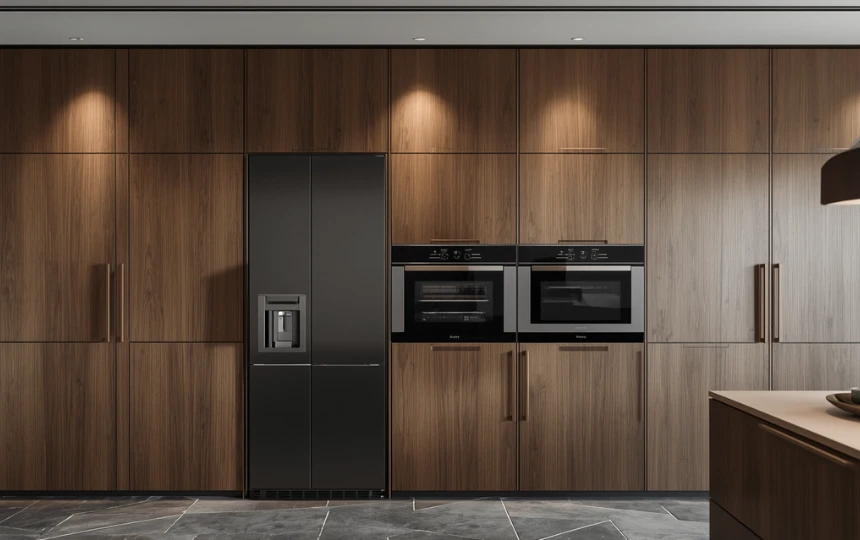
One of the most dramatic upgrades in contemporary kitchen design, the full-height storage wall transforms an ordinary run of cabinets into something closer to custom furniture. By extending cabinetry from floor to ceiling across an entire wall — integrating the refrigerator, oven column, and pantry pullouts behind matching panels — you create a singular, unified architectural statement. The result feels high-end regardless of the actual cabinet budget because the visual coherence does most of the heavy lifting. This is especially effective in open-plan homes where the kitchen is visible from living areas, creating a polished backdrop. Add an integrated step stool or library ladder for a functional, editorial touch.
Open Floating Shelves as a Style Statement
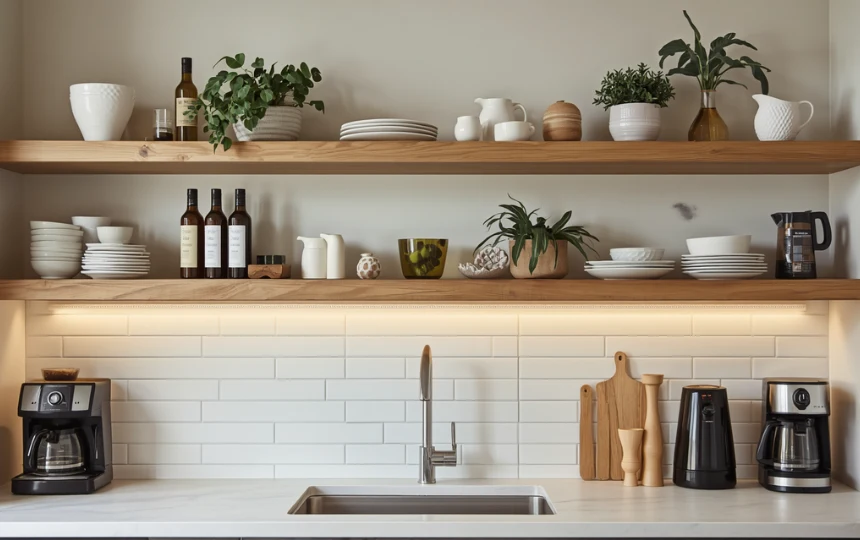
Open shelving isn’t for everyone — but when done right, it adds a level of warmth and personality that closed cabinets simply can’t match. The key is restraint: replace just one or two upper cabinet runs with shelves, rather than going wall-to-wall. Thick floating shelves in white oak, walnut, or painted wood look more substantial and architecturally intentional than thin box-store versions. Style them with a curated mix of everyday items (beautiful olive oil bottles, a pour-over kettle, ceramic mugs) rather than purely decorative objects, so the display feels lived-in and honest. Keep shelving above a dark or tiled backsplash for maximum contrast and visual pop.
Hidden Pantry: The Concealed Door
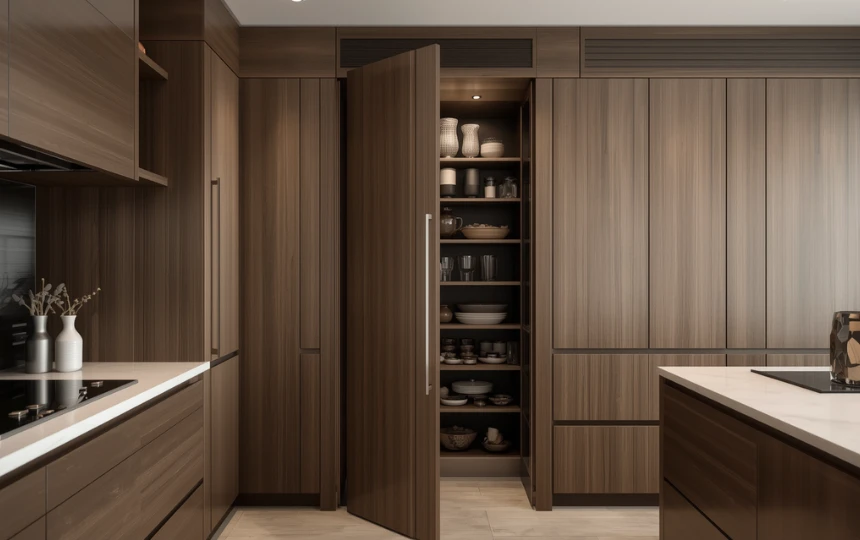
Few things are more satisfying in a modern kitchen than a hidden pantry that disappears entirely into the cabinetry wall. By cladding a standard door with matching cabinet panels and using a push-to-open or flush pull mechanism, you create a continuous, uninterrupted kitchen wall with a secret behind it. Inside, the pantry can be maximally utilitarian — wire shelving, pullout drawers, appliance storage — while the exterior remains serene and architecturally clean. This works particularly well in open-plan kitchens where visual clutter competes with living areas. Homeowners who’ve done it consistently report that guests simply don’t notice the door until it’s opened for them, which is exactly the point.
Get a realistic cost estimate for your kitchen renovation based on your zip code, kitchen size, and scope of work.
Kitchen Island & Peninsula Ideas
Ideas 6–10The Waterfall Island: Drama in Stone
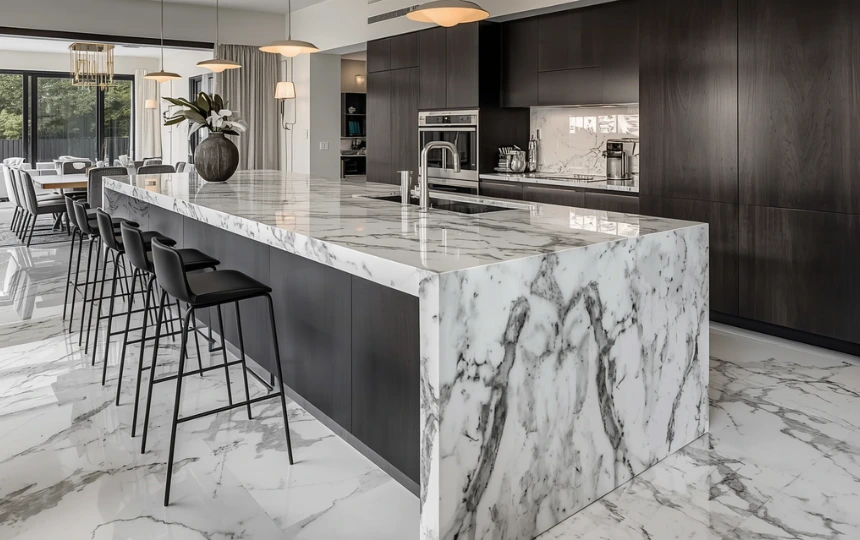
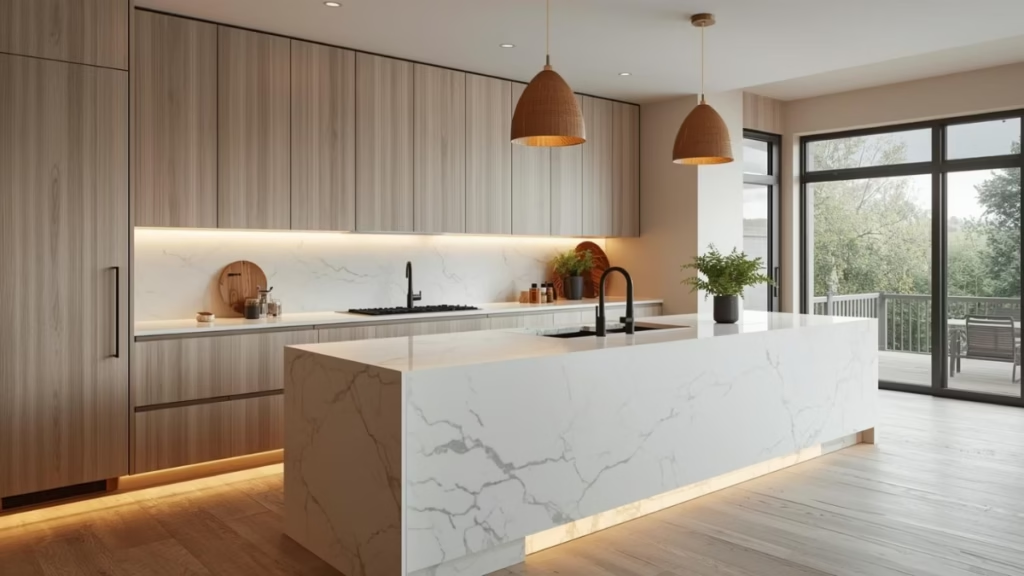
The waterfall island — where the countertop material cascades vertically down one or both sides to the floor — is the single most transformative upgrade you can make to an existing kitchen layout. It reads as sculptural rather than functional, elevating the island from a work surface to a design feature. Calacatta quartz and honed Carrara marble are the most popular materials, but the technique works equally well with dramatically veined porcelain, bookmatched quartzite, or even solid wood. A contrasting base (dark walnut waterfall with white cabinetry body, for example) adds visual interest. Budget carefully: the extra stone and precision cutting adds 20–40% to the countertop cost.
The Butcher Block Island Contrast
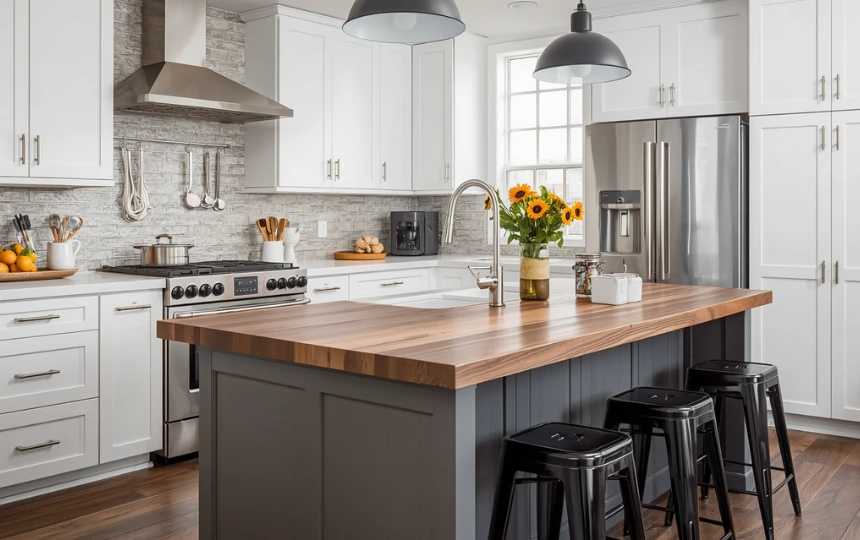
Using a butcher block surface on the island while keeping stone countertops on the perimeter is a design move that adds instant warmth and practicality. The wood surface is gentler on knives, provides a naturally grippy prep area, and introduces organic texture that softens an otherwise hard-material kitchen. Walnut end-grain is the premium choice — its tight grain pattern is more water-resistant and develops a rich patina over time. White oak and maple are more affordable alternatives that still photograph beautifully. Regular oiling with food-safe mineral oil is all the maintenance required. This pairing works across modern, transitional, and farmhouse aesthetics.
The Furniture-Style Island With Legs
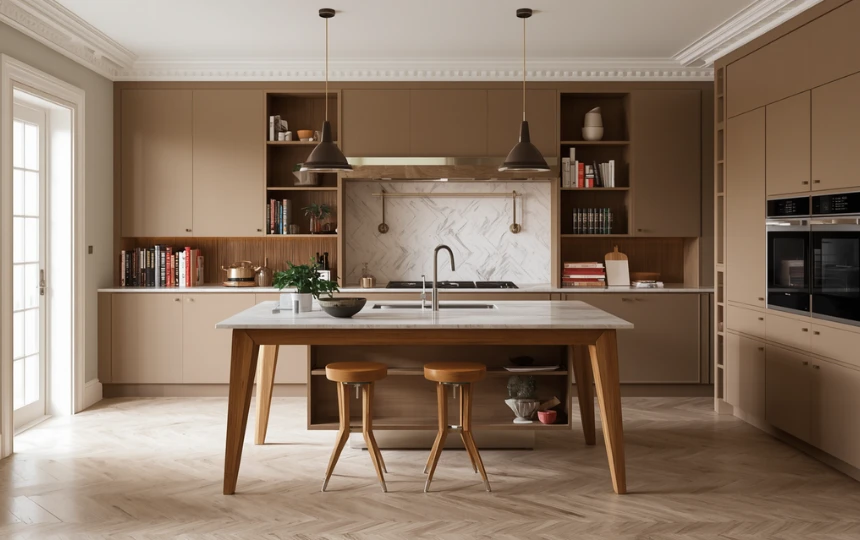
An island that looks like a piece of furniture — not built-in cabinetry — adds charm, distinction, and a collected-over-time quality that’s hard to achieve with standard construction. Visible legs (tapered, turned, or straight steel) lift the visual weight of the island off the floor, making even a mid-sized kitchen feel more open. Open shelving on one side can display cookbooks and ceramics, doubling as casual storage. Choose an island color that contrasts with your perimeter cabinets — a painted green or terracotta island against white perimeter cabinets is a particularly striking combination. This style suits transitional, farmhouse, and contemporary-eclectic aesthetics best.
Extended Island With Integrated Dining
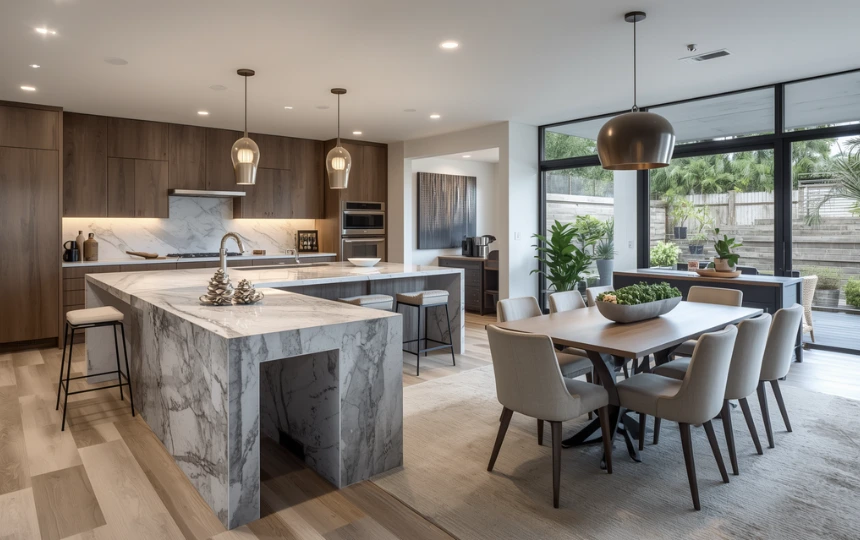
In open-plan homes where space allows, extending the island to include a dining or breakfast area at one end eliminates the need for a separate dining table — freeing up square footage and keeping the social flow of the space intact. The island does double or even triple duty: prep surface, breakfast bar, and family dining table. Design the dining end at standard table height (30 inches) while keeping the prep area at standard counter height (36 inches) for ergonomic comfort. A step in the island base handles the transition elegantly. Pair with a statement pendant cluster above the dining end to define the zone without walls.
The Microwave-Drawer Island: Hidden Appliances
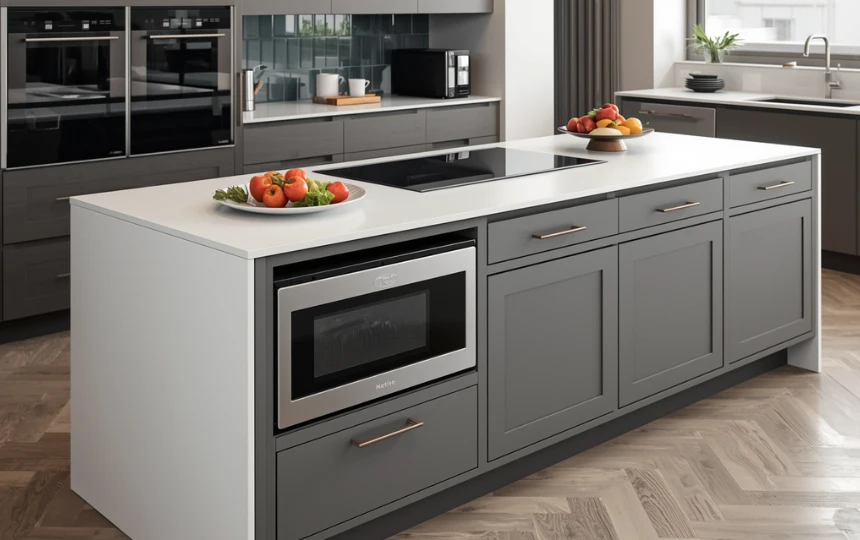
One of the cleanest expressions of modern kitchen design is hiding the microwave in a drawer built into the island base. Microwave drawers (Sharp, Wolf, and Dacor make excellent ones) pull out at a comfortable mid-height, eliminating the awkward over-range position and keeping the countertop completely clear. The drawer integrates seamlessly into the island cabinetry, invisible when closed. Beyond the microwave, consider also incorporating a warming drawer, dishwasher drawer, or even a mini beverage fridge in the island base — turning it into a complete, self-contained prep and hospitality station. These integrated choices are a hallmark of considered, professional kitchen design.
Countertop & Surface Ideas
Ideas 11–15| Material | Durability | Maintenance | Cost/sqft | Best For |
|---|---|---|---|---|
| Quartz | ★★★★★ | Very Low | $55–$120 | Busy families, everyday use |
| Quartzite | ★★★★☆ | Low–Medium | $75–$200 | Natural stone lovers |
| Marble | ★★★☆☆ | High | $75–$250 | Low-traffic, aesthetic-first kitchens |
| Porcelain Slab | ★★★★★ | Very Low | $60–$150 | Modern design, heat-heavy use |
| Butcher Block | ★★★☆☆ | Medium | $30–$90 | Islands, farmhouse, warm kitchens |
| Dekton | ★★★★★ | Very Low | $80–$180 | Outdoor kitchens, high-UV exposure |
Honed Marble: The Timeless Luxury Surface
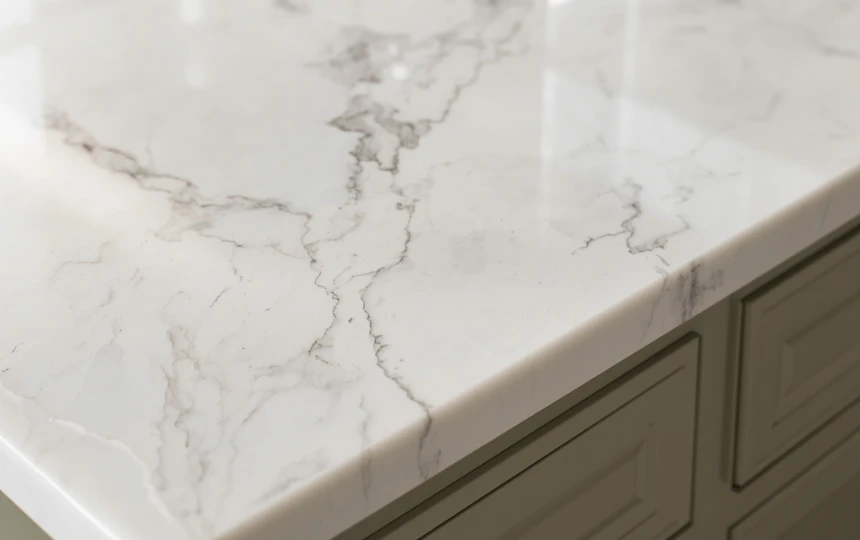
While polished marble can feel cold and formal, honed (matte) marble possesses a quiet, almost chalky warmth that works beautifully in modern kitchens. The matte surface is also more forgiving of scratches and etching — they blend in rather than catching light. Carrara and Calacatta are the classic choices, but also explore Arabescato for bolder veining or Thassos White for an ultra-bright background. For kitchens that see moderate use — weekend cooks and entertainers rather than daily heavy prep — honed marble is a genuinely viable (if high-maintenance) countertop option. Seal annually with a quality penetrating stone sealer, and embrace the patina that develops over time.
Dramatic Porcelain Slabs: The Maintenance-Free Statement
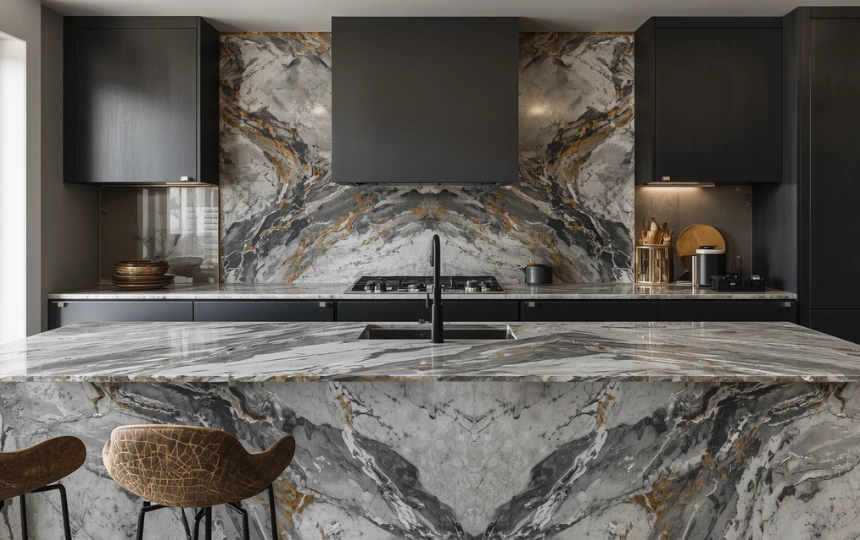
Porcelain slabs have emerged as the smart designer’s alternative to natural stone — offering the visual drama of marble or quartzite with essentially zero maintenance. Brands like Neolith, Dekton, and Atlas Concorde produce stunning large-format slabs (up to 126″ × 63″) with realistic stone patterns that, in some cases, genuinely fool the eye. The material is non-porous, heat-resistant, UV-stable, and nearly impossible to scratch under normal kitchen use. The real design opportunity is in matching the countertop and backsplash from the same slab — creating a continuous, unbroken material flow that reads as extremely high-end. Ideal for modern and contemporary kitchens where visual consistency is prized.
Concrete Countertops for Industrial Edge
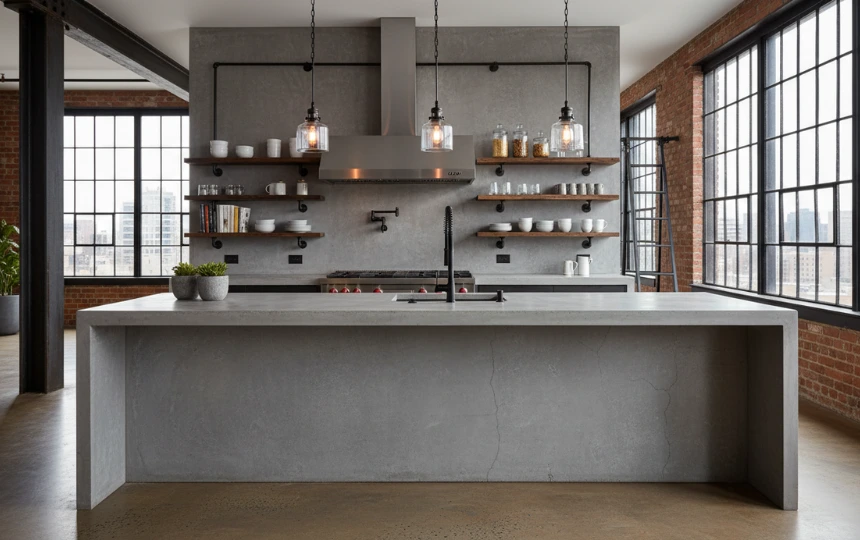
Poured-in-place or precast concrete countertops occupy a unique niche in modern kitchen design — utilitarian in origin, but undeniably artisanal in execution. The slight texture, the occasional air pocket, the subtle tonal variation are not defects but features that give the surface a handmade character impossible to replicate with manufactured products. Concrete can be tinted (charcoal, bone, terracotta), embed aggregates or glass chips, and be cast to any edge profile or depth. Sealed properly with a penetrating sealer and topcoat, it’s reasonably durable and resistant to heat. Works brilliantly in industrial, loft, and contemporary-eclectic kitchens where originality is the primary design goal.
Integrated Sink: Seamless Countertop Continuation
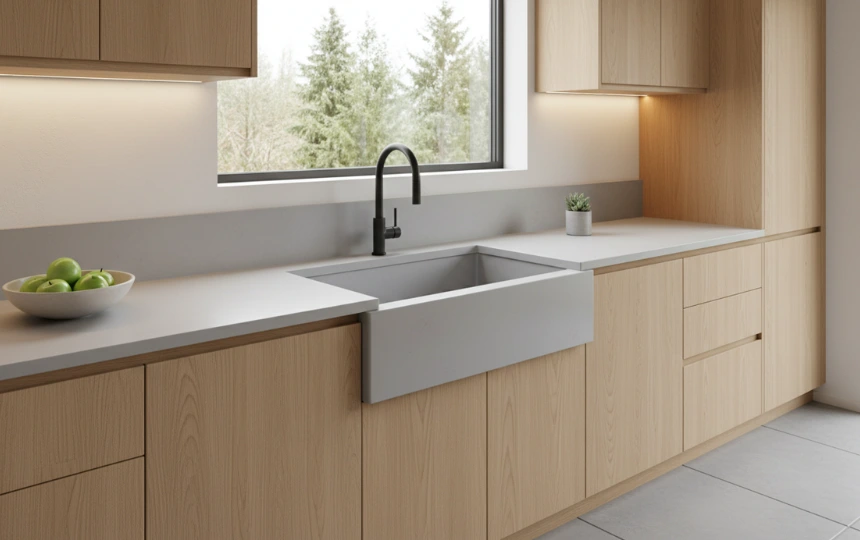
An integrated sink — cast from the same material as the countertop with no visible seam between the two — is one of the cleanest details in modern kitchen design. Composite, Corian, concrete, and solid surface materials all support this technique. The lack of a rim or joint means no caulk to discolor, no edge to catch food debris, and no visual interruption in the countertop plane. The result looks deliberate and architecturally refined. Integrated sinks work particularly well in Scandi, Japanese-minimalist, and high-end contemporary kitchens. Choose a trough or apron front style for added drama; keep faucet selection minimal and architectural to match.
Countertop-to-Backsplash Continuity in Stone
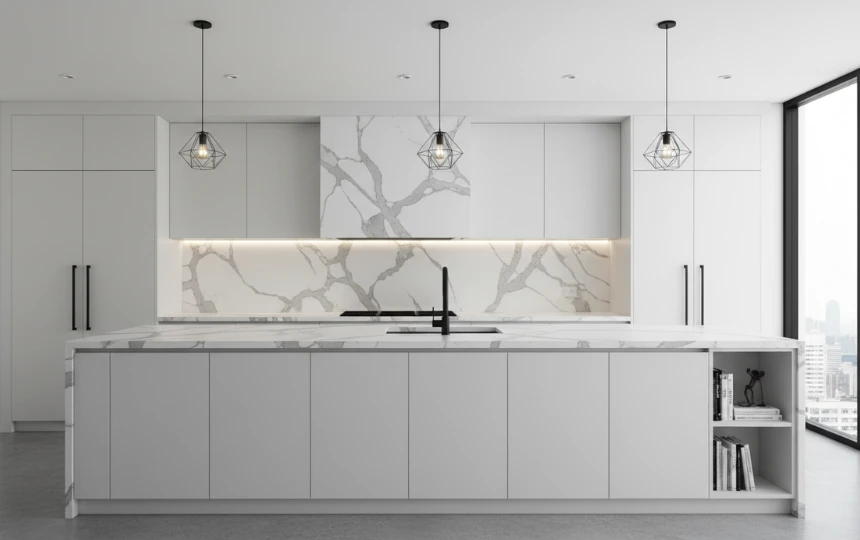
Carrying the same stone or quartz slab from the countertop up the wall as a full-height backsplash creates a continuous, unbroken material plane that looks extraordinarily sophisticated. There are no grout lines, no tile joints, and no visual interruptions — just a single, flowing surface from counter level to upper cabinet bottom. This detail is most impactful with dramatically veined materials where the continuity lets the veining’s pattern flow naturally from horizontal to vertical. It requires precise templating and installation (the vertical slab is typically thinner — 6mm vs 20mm — and adhesive-mounted), but the result is consistently among the most photographed elements in any kitchen it appears in.
Ready to Start Planning?
Our free renovation planner helps you organize materials, contractors, and timelines — all in one place.
Open the Renovation Planner →Backsplash & Tile Ideas
Ideas 16–20Zellige Tile: The Handmade Moroccan Statement
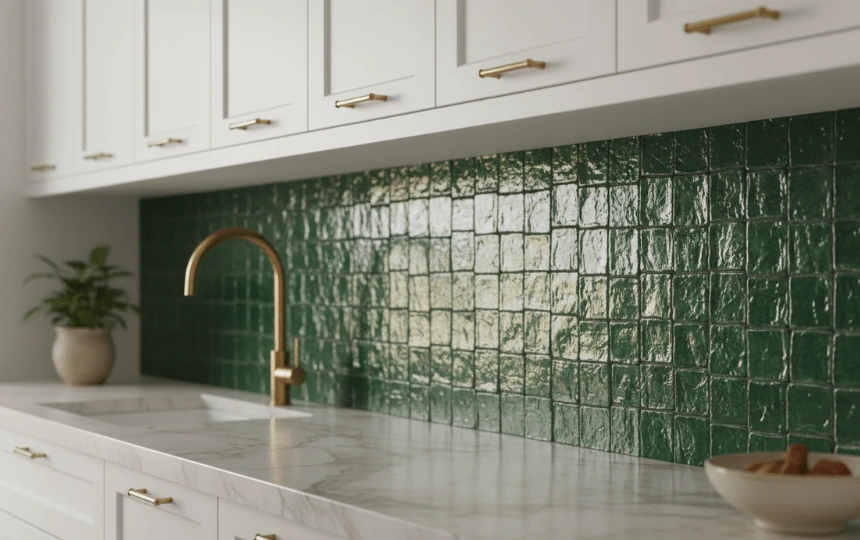
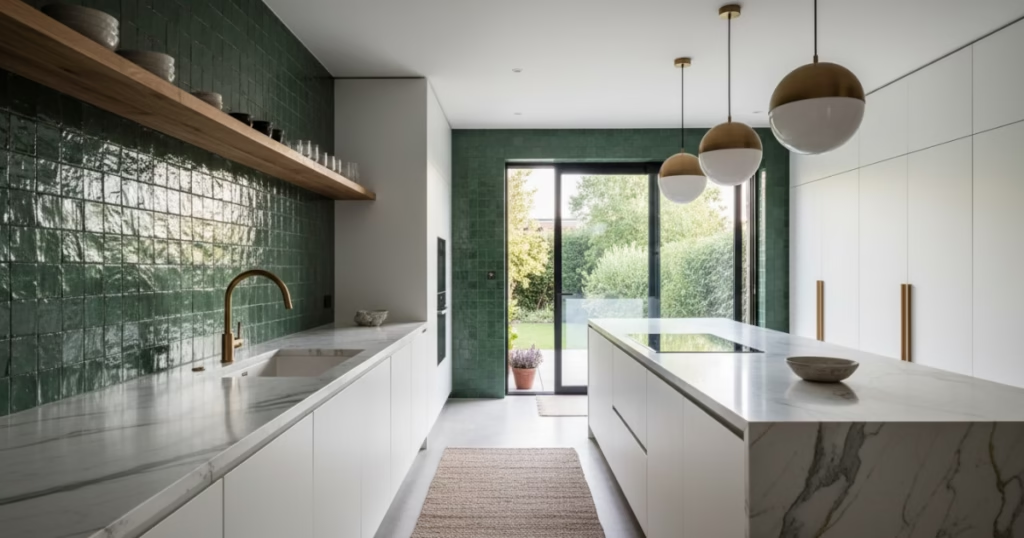
Zellige tile — handmade in Morocco from natural clay and fired with metallic mineral glazes — has become the defining backsplash choice for kitchens that want warmth and artisanal character alongside a contemporary sensibility. Each tile is slightly different in thickness and glaze depth, creating a rippling, light-catching surface that feels alive throughout the day as natural light shifts. Deep hunter green, terracotta, and soft sage are the most popular colors, though zellige comes in an enormous palette. Install in a grid or stacked pattern (not herringbone — it fights the natural variation) and use a grout color that closely matches the tile to let the texture do the work.
Limewash or Plaster Finish: The Anti-Tile Backsplash
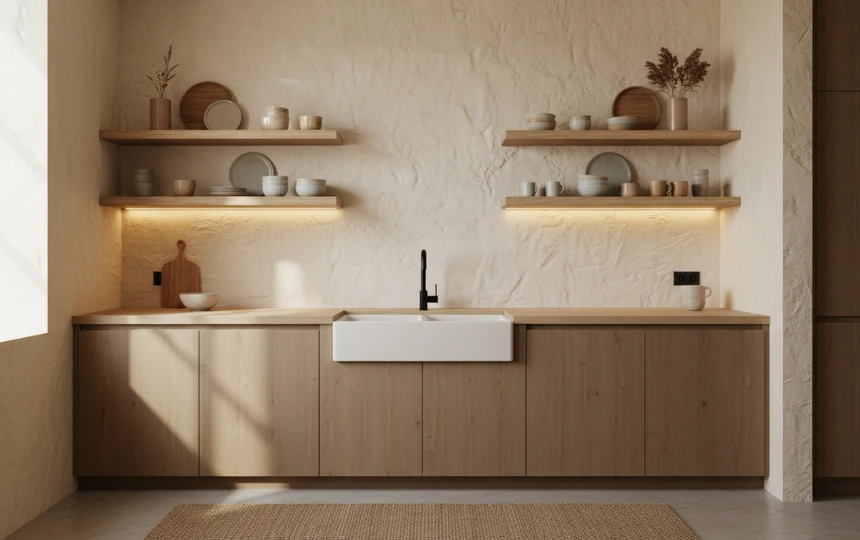
Who says a backsplash has to be tile? Limewash paint and Venetian plaster finishes applied directly to the wall behind the countertops create a soft, artistic backdrop that photography magazines love — and that tile simply can’t replicate. These plaster-based finishes are naturally antimicrobial, can be wiped clean (especially if sealed with a matte topcoat), and develop a beautiful, nuanced depth of color that shifts between warm and cool depending on the light. Ideal for the zone above a range or beside a window where moisture exposure is limited. The result is a kitchen that feels more like an artist’s studio than a standard cooking space — personal, calm, and distinctly grown-up.
Bold Graphic Tile: The Pattern Play
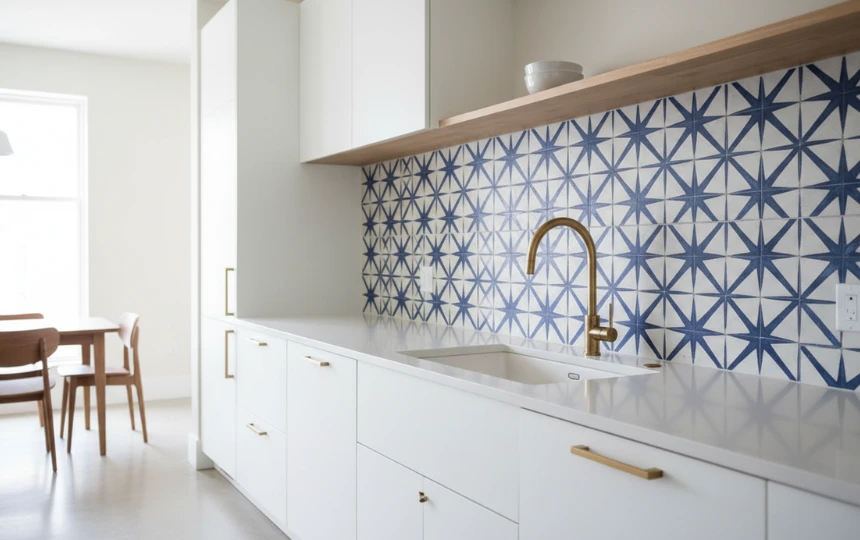
A bold patterned backsplash is the single quickest way to inject personality into an otherwise neutral kitchen — and when the rest of the kitchen is simple, the pattern can be as brave as you like. Encaustic cement tiles, Portuguese azulejo-inspired prints, Maximalist botanical patterns, and Art Deco geometrics all work beautifully as kitchen backsplashes. The key design principle: one statement, nothing competing. If the backsplash is the hero, keep cabinets, countertops, and hardware in their most understated versions. This approach is also budget-friendly — even a few square feet of expensive statement tile goes a long way behind a range or on a single accent wall.
Slim Brick or Metro Tile in Unexpected Colors
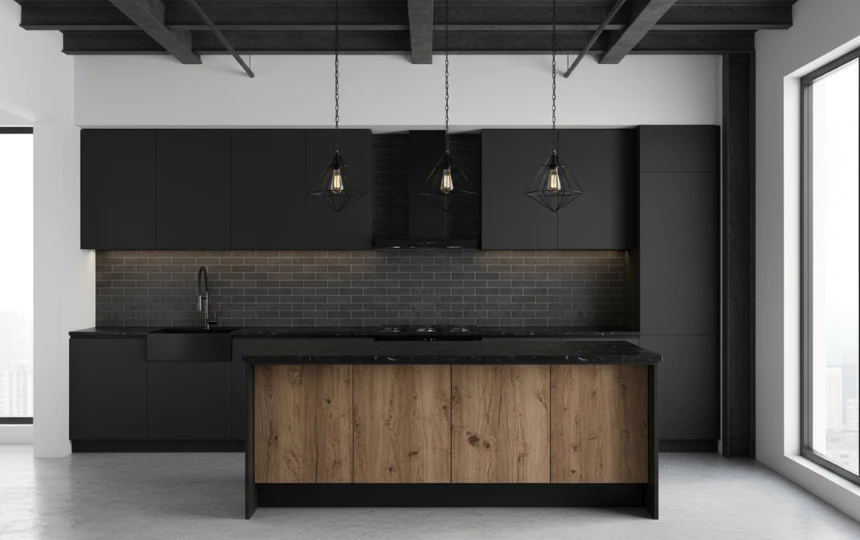
Classic subway tile gets its modern update by going unexpected on color and format. Slim brick tiles (2×8, 1.5×6) in dark charcoal, glossy black, sage green, or dusty rose break from the standard white metro tile format while preserving the reassuring horizontal rhythm. A stacked bond (tiles aligned directly above each other rather than offset) looks particularly sharp in a modern kitchen, echoing architectural brickwork without the industrial roughness. Choose a grout that closely matches the tile for a quiet, textured result — or dramatically contrasts (white grout on black tile, for example) to make the grid pattern itself the visual event.
Fluted or Ribbed Tile: The 3D Texture Trend
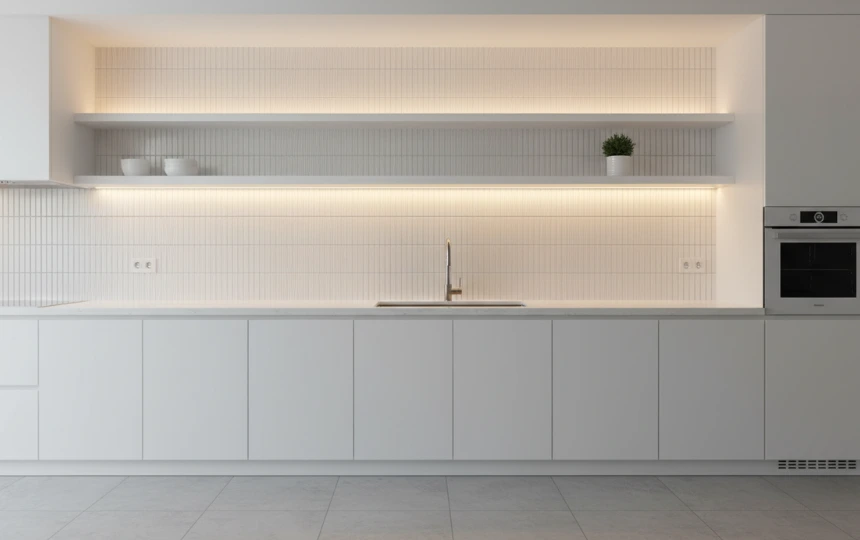
Fluted and ribbed tiles have crossed over from bathroom design to become one of the most exciting backsplash trends in modern kitchens. The three-dimensional profile creates shadow lines that shift throughout the day with changing light — a subtle, sophisticated animation built directly into the wall. Available in flat verticals (elegant, minimal), curved fins (dramatic, tactile), and wave patterns (playful, organic). Gloss-finished versions maximize the light-play effect; matte fluting gives a more architectural, restrained result. In a neutral kitchen, a full-height run of white fluted tile creates enough visual interest to make the backsplash feel designed without competing with other elements.
Kitchen Lighting Ideas
Ideas 21–25Statement Pendant Cluster Over the Island
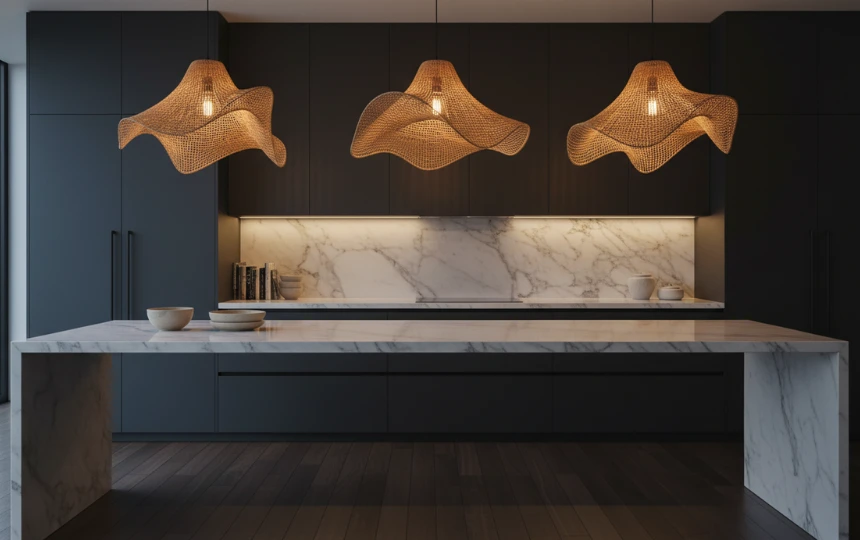
The pendant lights above a kitchen island are its jewelry — functional, yes, but also the single most important aesthetic accent in the space. A cluster of two to four pendants hung at staggered heights over an island creates a collected, curated look that a single light can’t achieve. Choose pendants that complement but don’t literally match cabinet hardware or plumbing — a slight material contrast (rattan pendants over a brass-hardware kitchen, or smoked glass over an all-black kitchen) reads as more sophisticated. Scale matters enormously: pendants that are too small look tentative and unanchored. As a rule, each pendant for an island should be at least 8–10 inches in diameter.
Under-Cabinet LED Strips: The Workhorse Detail
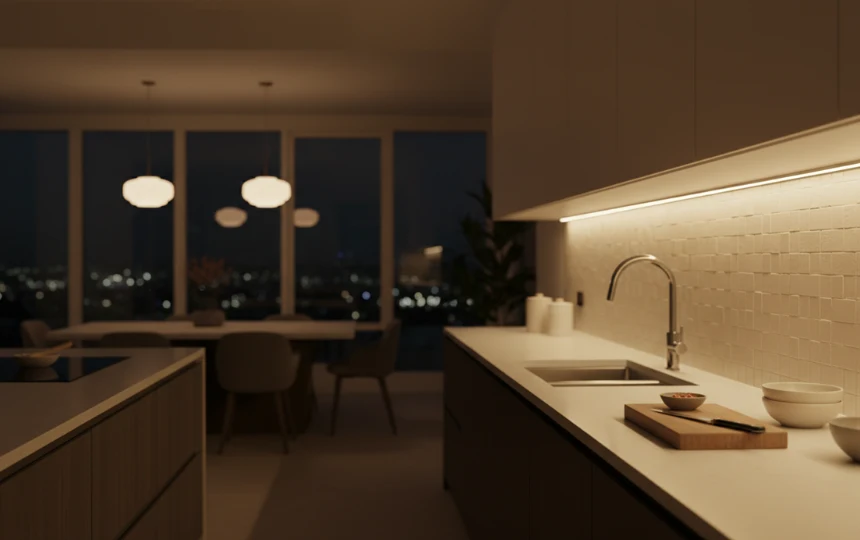
Under-cabinet lighting is the upgrade with the highest practicality-to-investment ratio in kitchen design. A continuous LED strip mounted just inside the front edge of upper cabinets eliminates counter shadows entirely, making every task from chopping to reading recipes dramatically easier. The right color temperature matters: choose 2700K–3000K for warm, incandescent-like light that flatters food and skin; avoid 4000K+ which makes kitchens feel clinical. Dimmable strips, ideally connected to a smart controller, let you shift from bright task lighting to soft ambient glow for evening dining without changing a single fixture. Always recess the strip slightly to avoid direct view of the LED dots from seated eye level.
In-Cabinet Lighting for Glass-Front Displays
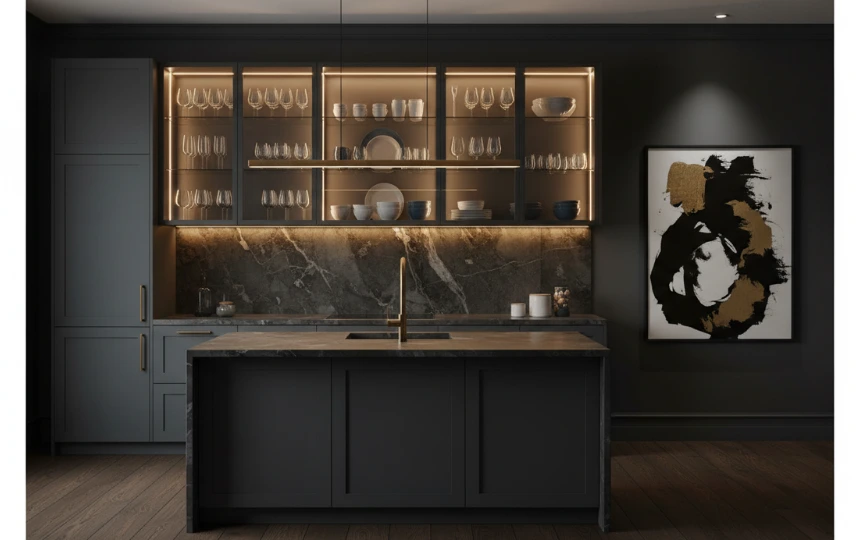
Glass-front cabinets become genuinely special when lit from within. A small LED puck or continuous strip mounted at the top of the cabinet interior creates a soft, pooled glow that turns your glassware, ceramics, or cookbooks into a curated display rather than mere storage. The effect is especially striking in the evening when overhead lights are dimmed — the lit cabinets act almost like small illuminated boxes, adding warmth and depth to the kitchen. Paint or line the cabinet interior in a contrasting color (matte navy inside a white cabinet, for example) to amplify the jewel-box effect. Keep displays curated and consistent — mismatched items in a lit display read as clutter rather than collection.
Recessed Ceiling Grid With Layered Dimming
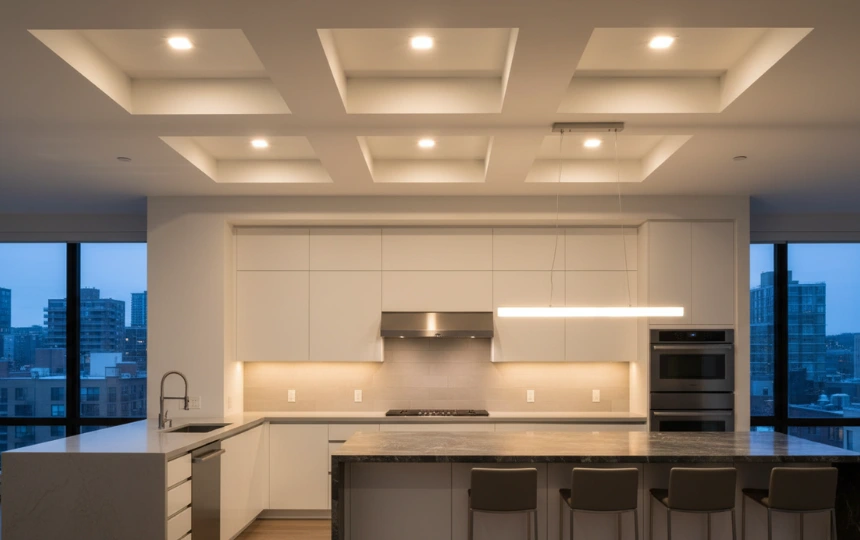
The most functional modern kitchens are lit in layers: task lighting over prep zones, ambient general lighting across the ceiling, accent lighting in display areas, and atmospheric low lighting for dining and entertaining modes. A well-planned recessed can lighting grid, split across multiple dimmer circuits, lets you transition between all these modes without adding a single fixture later. Plan ceiling lighting before drywall goes up — retrofitting is exponentially more expensive. Specify IC-rated, airtight housings with high-CRI (90+) LED modules for accurate color rendition. Use 4-inch cans rather than 6-inch in standard 9-foot kitchens; the smaller aperture looks more refined and modern.
Sculptural Range Hood as a Light Source
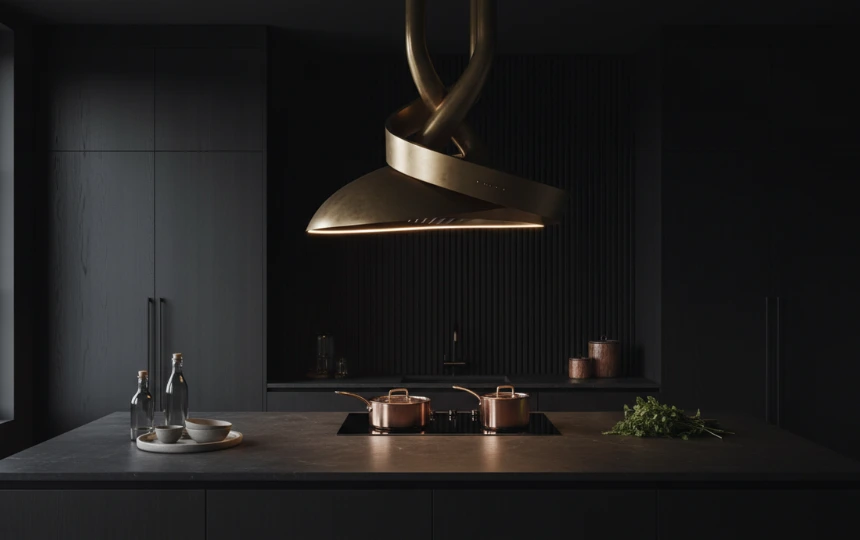
The range hood is one of the most underutilized design opportunities in kitchen planning — most people default to a basic stainless or painted metal hood when the space allows for something genuinely spectacular. A custom plaster hood, a hand-hammered copper canopy, a sculptural concrete form, or a dramatic blackened steel chimney instantly elevates the kitchen’s cooking zone from purely functional to architecture. Many custom hoods also incorporate integrated task lighting that washes the cooktop beautifully — far more effective than generic insert lights. At roughly 10–15% of the kitchen’s visual field, the range hood deserves design investment proportional to its prominence.
Color & Finish Ideas
Ideas 26–30Deep Forest Green Cabinetry
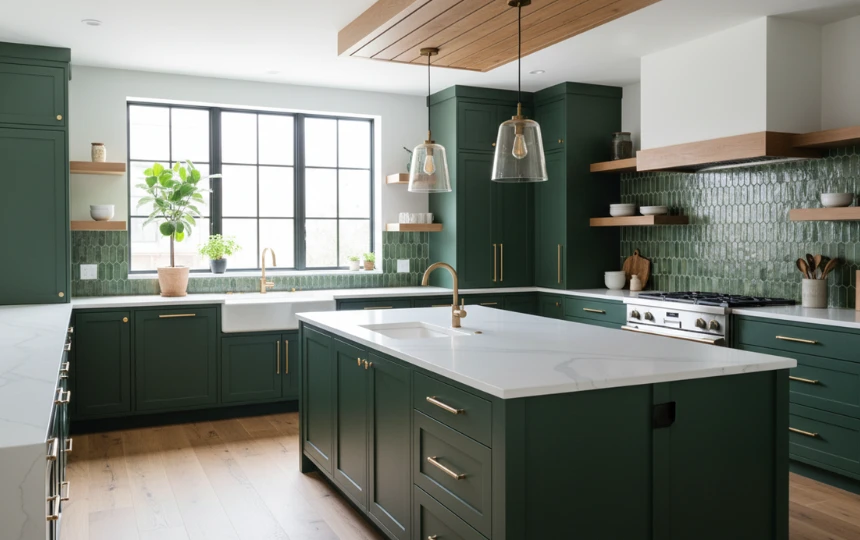
If there’s been a defining color story in kitchen design over the past three years, it’s the rise of deep greens — from sage and olive through to forest, hunter, and near-black bottle green. These colors do something white and grey cabinetry never can: they ground the kitchen in the natural world while reading as unmistakably sophisticated. Deep forest green against white quartz countertops and unlacquered brass hardware is a combination that feels simultaneously timeless and completely contemporary. It works in both traditional and modern kitchen profiles, which explains its remarkable cross-demographic popularity. In darker kitchens with limited natural light, push green toward sage or eucalyptus to keep the space from feeling cave-like.
The All-Black Kitchen: Moody and Confident
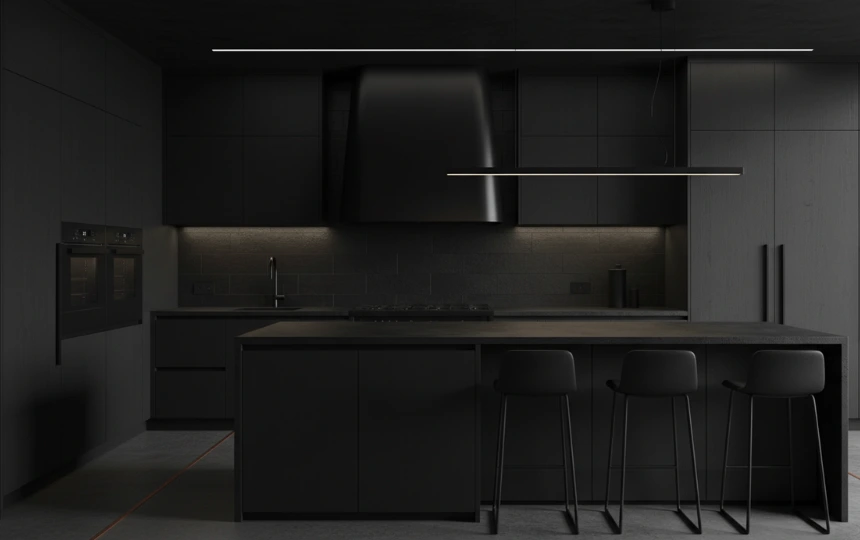
The all-black kitchen is among the boldest moves in residential interior design — and in the right home, it’s absolutely stunning. The key to making a black kitchen feel rich rather than oppressive is layering textures: matte black cabinets alongside honed black granite, polished black faucets, rough blackened steel, and warm aged brass accents create depth that prevents the monochrome from going flat. Natural wood elements — a butcher block section, floating oak shelves, or a worn-wood dining table adjacent — introduce essential warmth and prevent the space from feeling funereal. This kitchen demands confident commitment: half-measures produce a tired, dreary result. Go all in, and the result is extraordinary.
Warm White: Replacing the Cool White Kitchen
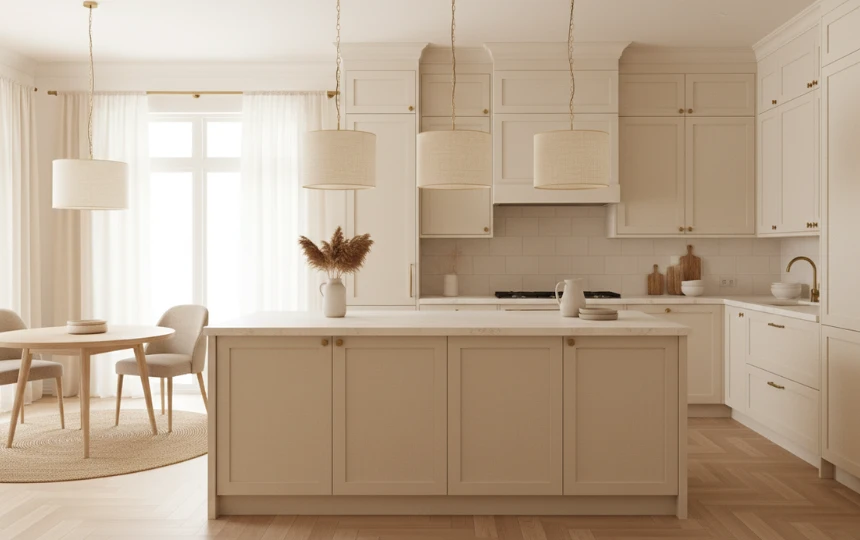
The stark, cool, blue-white kitchens that dominated the 2010s are giving way to creamier, warmer whites that feel genuinely inviting rather than clinical. Think linen, parchment, antique white, and warm ivory — whites with yellow, pink, or greige undertones that glow under incandescent light rather than looking flat. This shift toward warmth also extends to countertops (creamy quartzite instead of bright Carrara), hardware (aged brass and champagne bronze over chrome), and backsplash tiles (warm handmade clay tiles over bright gloss subway). The resulting kitchen is still light, bright, and timeless — but with a depth and warmth that photographs beautifully in natural light and feels genuinely comfortable to cook in.
Natural Wood Veneer Cabinetry
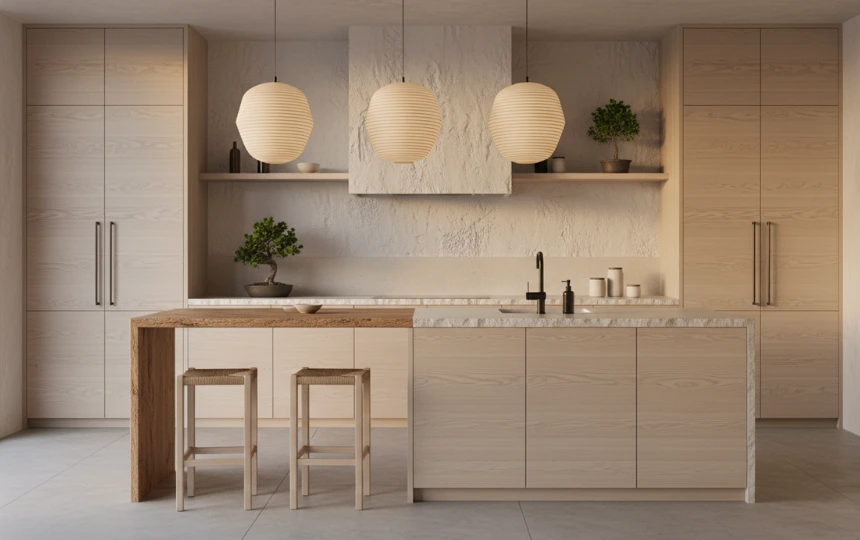
Natural wood-fronted cabinetry — particularly flat-panel doors in white oak, cerused oak, walnut, or ash veneer — defines the warmest direction in contemporary kitchen design. Unlike painted cabinets, wood veneer brings the irreplaceable quality of natural grain variation: no two doors are quite identical, and the cumulative effect of a full kitchen of beautifully figured oak creates an organic warmth that paint simply cannot emulate. Pair with honed stone countertops (not polished — the matte vs matte material dialogue is more sophisticated), minimal or absent hardware, and simple stone or concrete floors. This is the kitchen aesthetic that defines the Japandi movement, and it ages more gracefully than almost any other style direction.
Terracotta Accents: Warm Earth Tones
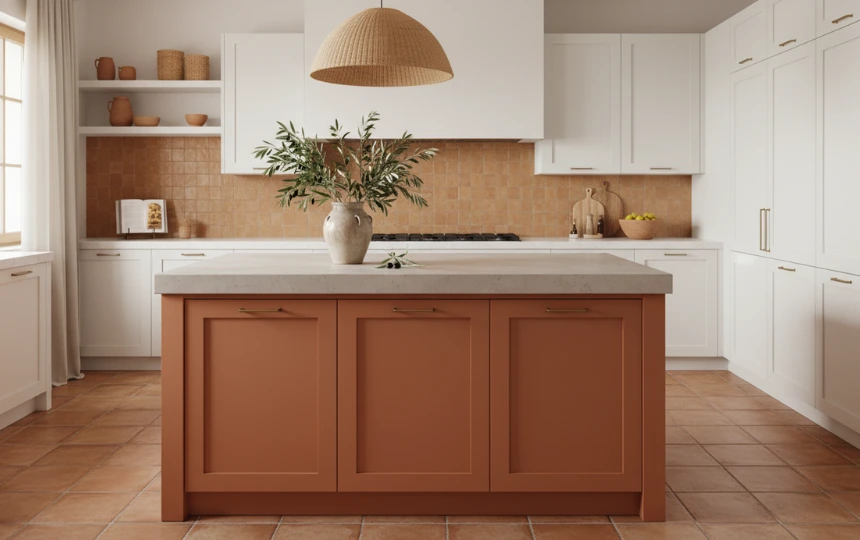
Terracotta — the warm, fired-clay orange that runs through Mediterranean and Middle Eastern architecture — has re-emerged as one of the most compelling accent colors in modern kitchen design. Use it on the island alone (against white perimeter cabinets for maximum drama), as a backsplash tile, or as floor tiles with natural clay grout. Terracotta resists going out of style because it’s fundamentally connected to natural materials; it reads as earthy rather than trendy. Pair it with matte brass hardware, raw linen textiles, hand-thrown ceramics, and fresh herbs to build a cohesive, Mediterranean-inspired sensibility that feels warm, personal, and completely of the moment without being fashionably disposable.
Smart & Functional Kitchen Ideas
Ideas 31–35Panel-Ready Integrated Appliances
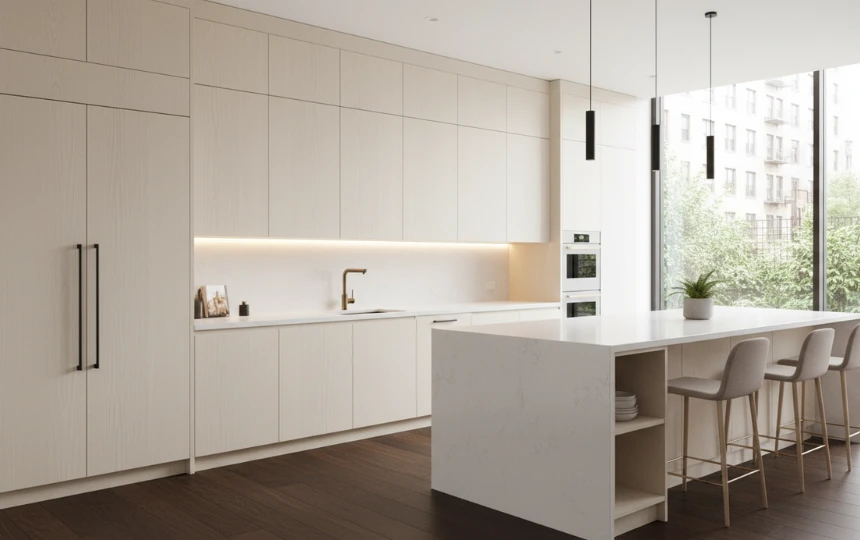
Panel-ready appliances — refrigerators, dishwashers, and sometimes even range hoods — that accept custom cabinet panels on their front face are the definition of seamless modern kitchen design. When your refrigerator is indistinguishable from the cabinet wall until you open it, and your dishwasher disappears entirely between pulls, the kitchen reads as architecture rather than a collection of appliances. Major brands including Sub-Zero, Miele, Fisher & Paykel, and Bosch all offer panel-ready options across price points. The dishwasher is the easiest and most cost-effective integration; the refrigerator is the most impactful. Budget for proper cabinet depth to accommodate the extra depth required by most panel-ready units.
Induction Cooktop Flush With Countertop
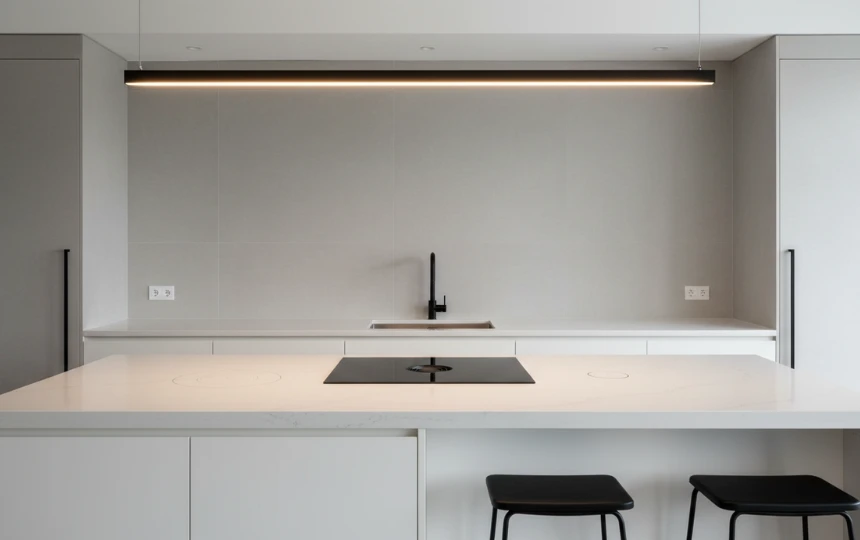
The latest generation of induction cooktops from Miele, Bora, and ATAG install completely flush with the surrounding countertop — no raised frame, no visible border, just a seamless glass surface that becomes indistinguishable from the countertop when off. Some models integrate the downdraft ventilation directly beneath the cooktop surface, eliminating the need for a range hood entirely. This produces a countertop plane of extraordinary visual calm — uninterrupted and uncluttered. From a cooking perspective, the induction surface also extends the usable prep space when not in use, since the glass is flush and wipeable. The technology premium is real (expect to pay 40–80% more than a standard induction hob) but the design dividend is unmistakable.
The Chef’s Pantry: A Back Kitchen Solution
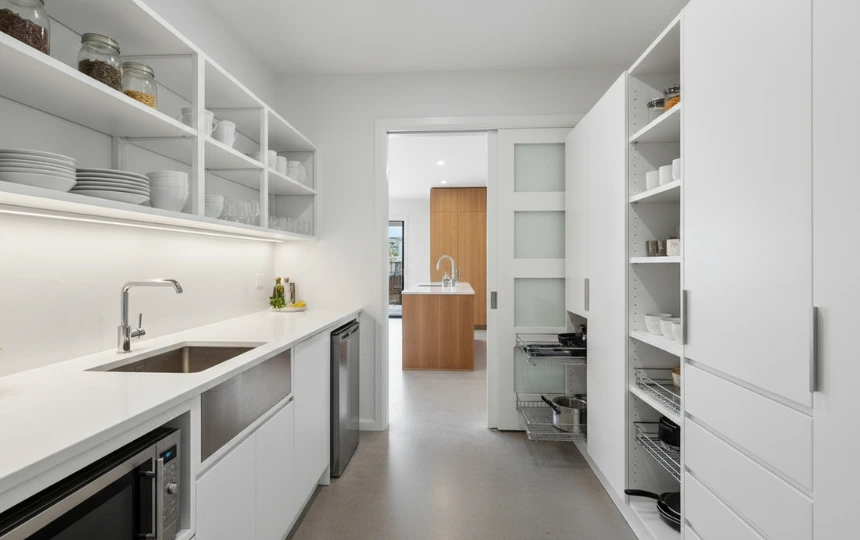
The scullery — or “back kitchen” — is the single most functional addition to a modern home for serious cooks and entertainers. Located adjacent to the main kitchen (often behind a door or pocket panel), the scullery handles all the unglamorous but essential tasks: overflow storage, a second sink for washing up, the microwave, the toaster, the large stand mixer, the bulk pantry items. The main kitchen stays immaculate and magazine-ready while the scullery absorbs the mess of real cooking life. Even a modest 6×8 foot scullery transforms how a kitchen functions, eliminating the constant battle between the need for a clean, beautiful space and the reality of everyday use.
Smart Storage: Drawer Organizers and Pull-Out Systems
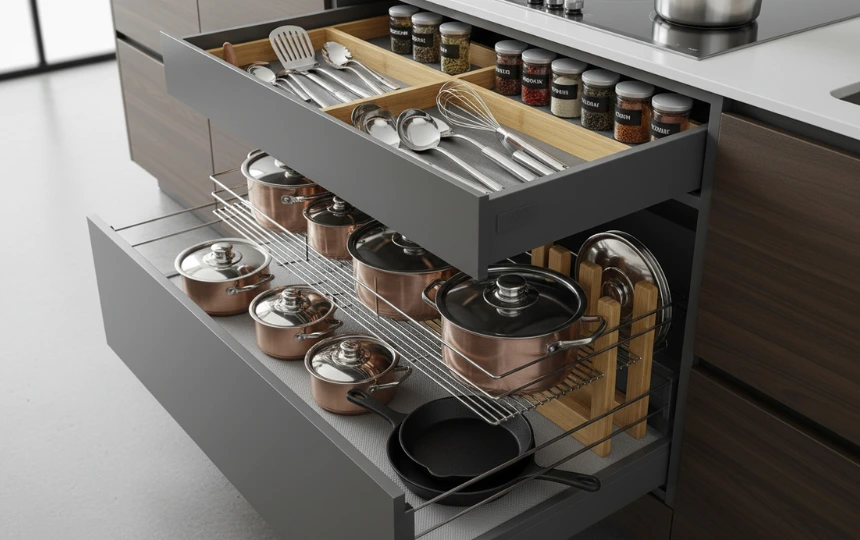
The internal organization of a kitchen’s cabinetry is where the gap between a beautiful kitchen and a truly brilliant one appears. Deep drawer systems (replacing base cabinet doors and shelves) that pull out smoothly on soft-close runners give full, unobstructed access to every item without crouching and reaching. Specify pull-outs inside corner cabinets, deep base drawers instead of shelves wherever possible, and full-extension drawer boxes that expose everything with a single pull. Blum, Häfele, and Grass make hardware systems that will outlast the cabinetry itself. Custom bamboo or acacia wood drawer inserts for cutlery, spices, and utensils complete the picture — function elevated to the level of a considered design detail.
Integrated Charging and Smart Hub in the Island
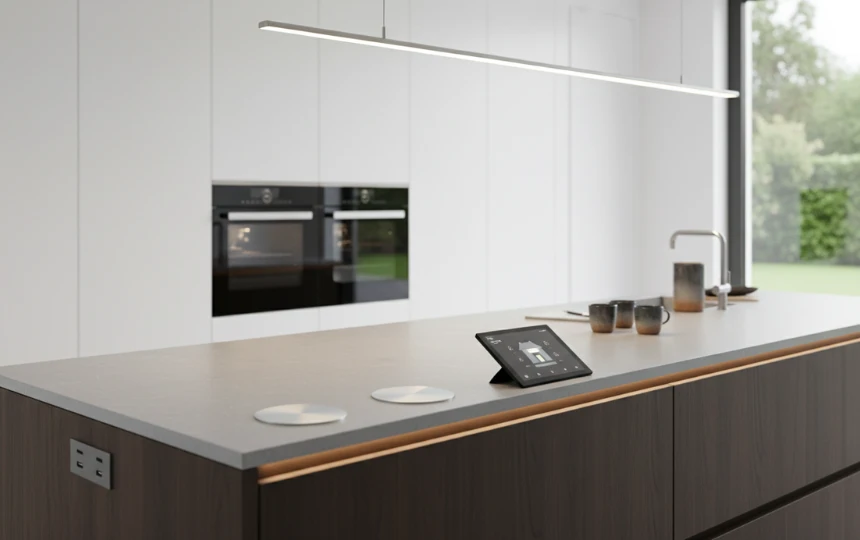
The kitchen island has become the command center of the modern home — the place where phones are plugged in, news is consumed, homework gets done, and smart home devices get checked. Designing for this reality means integrating USB-C and wireless Qi charging pads directly into the island surface (flush-mounted units from Hafele and Kessebohmer are excellent), as well as planning electrical outlets at multiple points along the island edge. A small smart-display device — an Echo Show or a Google Nest Hub — can be built into the end of the island cabinetry as a flush-mounted appliance, functioning as a kitchen timer, recipe screen, and smart home controller without cluttering the countertop.
Read our comprehensive design guide covering layouts, workflows, and materials in one complete resource.
Finishing Touches That Make the Difference
Ideas 36–40Hardware as Jewelry: The Power of Pulls and Knobs
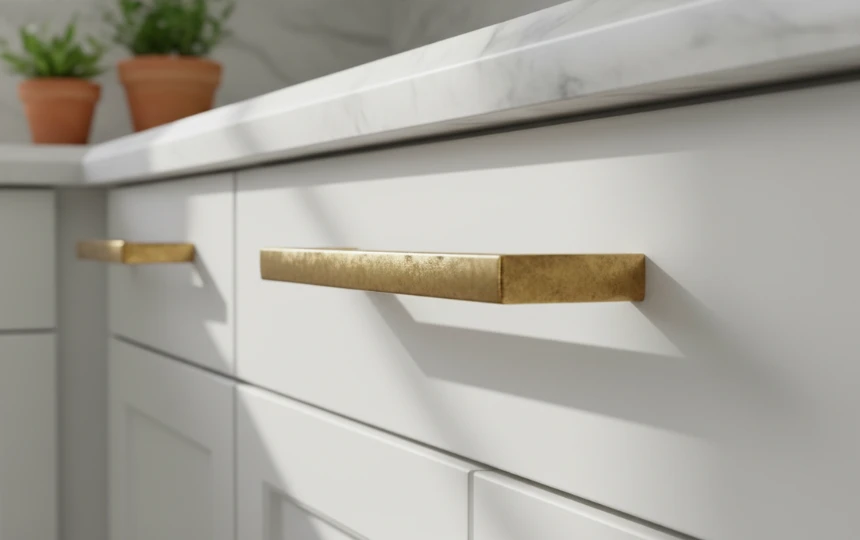
Hardware is to a kitchen what jewelry is to an outfit — small in area but enormous in impact, capable of shifting the entire mood and feel of the space. In 2026, the dominant hardware story is warm metals: aged brass (unlacquered, so it darkens naturally over time), champagne bronze, antique gold, and satin copper are all far more interesting than the polished chrome and brushed nickel that preceded them. Long bar pulls (6–8 inch) on drawers and doors read as modern and architectural; ceramic knobs add softness and retro-farmhouse charm; leather pulls add extraordinary warmth and tactile pleasure. Budget for good hardware — it’s one area where the price-per-use calculation clearly favors quality.
Kitchen Plants: Living Design Elements
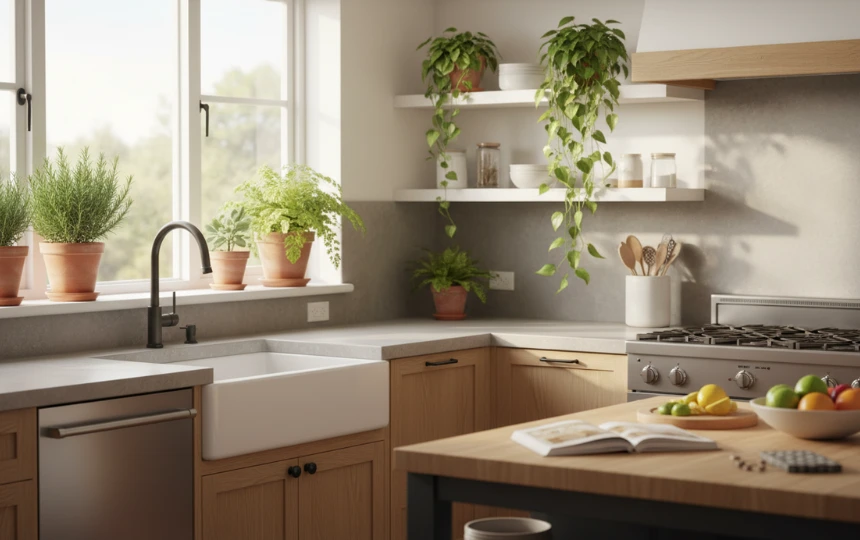
Living plants are the fastest, cheapest, and most forgiving way to add life, color, and natural texture to a modern kitchen. A small herb garden on the windowsill — rosemary, thyme, basil, mint — does double duty as décor and functional cooking resource. Trailing plants (pothos, philodendron, or string-of-pearls) draping from a floating shelf or above-cabinet ledge add a lush, cascading softness that balances hard kitchen surfaces beautifully. For a more designed statement, consider a narrow in-built herb planter with integrated drip tray along a kitchen window ledge, or a hydroponic countertop garden unit. The greenery makes the room feel fresh, oxygenated, and genuinely alive in a way that no purchased decoration can replicate.
Architectural Kitchen Faucet as a Focal Point
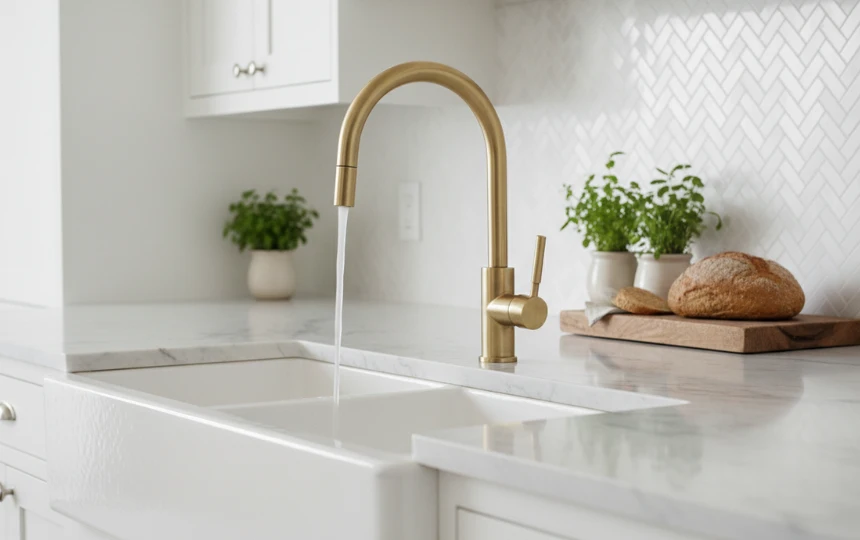
The kitchen faucet is used literally dozens of times a day — which makes it one of the highest-touch, highest-visibility items in the kitchen. An architectural, statement faucet pays dividends every single day. Bridge faucets (with two separate handles on a crossbar) have a timeless, vintage-professional look; articulated pot-filler faucets above the range are both functional and dramatic; sculptural single-lever faucets from Dornbracht, Waterworks, or Brizo are unmistakably designed objects. Match or intentionally contrast with hardware elsewhere in the kitchen (a matte black faucet against brass hardware works brilliantly). A pull-down or pull-out spray function keeps the design choices compatible with real-world kitchen use.
Statement Kitchen Flooring: Herringbone and Large Format Tile
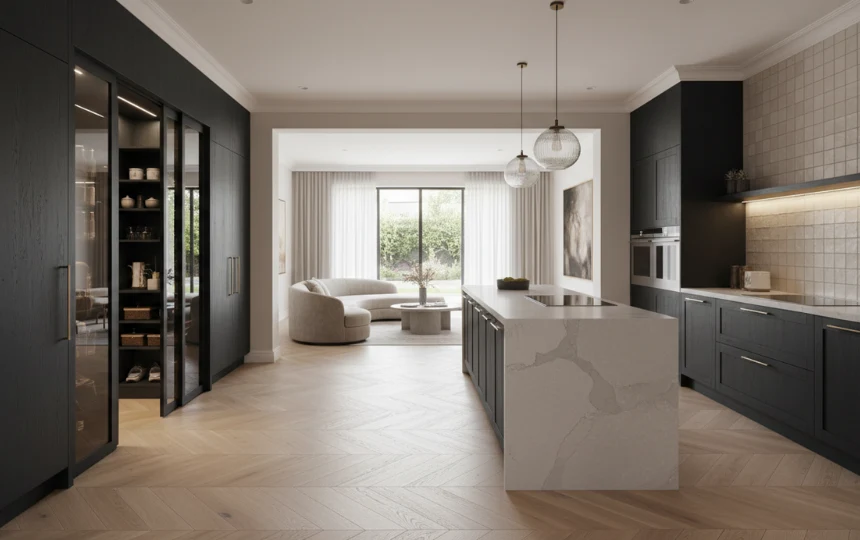
Kitchen flooring accounts for a significant portion of the visual field and deserves serious design attention. Herringbone or chevron-pattern hardwood or engineered wood flooring adds an instant architectural elegance that basic straight-lay planks can’t match — the pattern gives the floor its own visual language that enriches rather than competes with cabinetry and countertops. Wide planks (5 inches and above) read as more modern and generous than narrow strips. In tile, large-format porcelain or natural stone (60×60 cm or larger, with minimal grout joints) creates a seamless, expansive look ideal for open-plan spaces. Both treatments work beautifully across into adjacent living areas, unifying the home visually.
The Kitchen Window Garden: Framing Nature
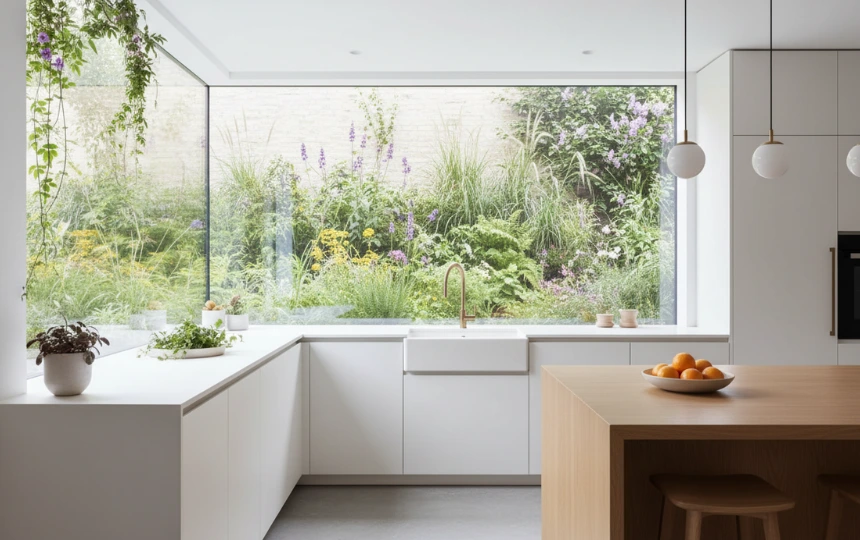
Few kitchen upgrades surpass the impact of maximizing natural light and view. If your kitchen looks out onto a garden, courtyard, or any green space, consider enlarging the window above the sink to a picture or floor-to-ceiling format that fully frames the view. The sink becomes the best spot in the house — dishes done with a vista. Omit window treatments entirely if privacy allows: bare glass reads as cleaner, more modern, and maximizes daylight. Garden or greenhouse windows that project outward from the kitchen wall create a small, sunlit growing nook perfectly suited to herbs and seedlings. Even in urban settings, a strategically positioned mirror or skylight can multiply natural light dramatically, making the kitchen feel twice as generous as its actual footprint.
Your Dream Modern Kitchen Is Closer Than You Think
Forty ideas is a lot — and no single kitchen should try to incorporate all of them. The most successful modern kitchens are built around a clear point of view: one or two big ideas executed flawlessly, supported by considered details that reinforce rather than compete with the main direction.
Start with the structural decisions — layout, cabinetry profile, countertop material — and let the finishing touches (hardware, lighting, plants, faucet) follow naturally from there. If you’re working with a budget, prioritize the elements you’ll interact with most: storage systems, lighting, and countertop surface. The waterfall island is beautiful; the induction cooktop is transformative; but under-cabinet lighting you use every day may ultimately give you more daily satisfaction than either.
Use our tools below to move from inspiration to plan — then build your dream kitchen with confidence.
Frequently Asked Questions About Modern Kitchen Design
The most popular modern kitchen styles in 2026 include warm minimalism (clean lines with natural wood and stone), Japandi (Japanese-Scandinavian fusion), transitional modern (a blend of traditional and contemporary), and dark moody kitchens featuring deep navy, forest green, or black cabinetry. Handleless cabinetry and integrated appliances remain top trends.
A modern kitchen remodel typically costs between $15,000 and $75,000 depending on size, materials, and scope. A minor refresh (paint, hardware, backsplash) runs $5,000–$15,000. A mid-range remodel averages $25,000–$50,000. A full luxury remodel with custom cabinetry, high-end appliances, and structural changes can exceed $100,000. Use our renovation cost calculator for a personalized estimate.
Quartz is the most popular choice for modern kitchens due to its durability, low maintenance, and wide range of colors. Quartzite offers natural stone beauty with better durability than marble. Porcelain slabs are emerging as a lightweight, heat-resistant option. Butcher block adds warmth and works well as a contrasting island surface. See our comparison table above for a full breakdown.
In 2026, warm whites and creamy off-whites are replacing stark white kitchens. Deep greens (sage, forest, hunter) remain highly popular. Navy blue, terracotta, and warm greige are strong choices. Two-tone cabinetry — lighter uppers and darker lowers — is a major trend. Black accents in fixtures and hardware continue to dominate across all color palettes.
To modernize a small kitchen: use light cabinetry to open up the space, install handleless or recessed-handle cabinets for sleek lines, extend upper cabinets to the ceiling for more storage and visual height, use a simple backsplash, choose integrated or panel-ready appliances, and add under-cabinet lighting to brighten work surfaces. A large-format floor tile with minimal grout joints will also make the floor — and the room — feel larger.
Open shelves work well in modern kitchens when used strategically — typically on one section of wall rather than throughout. They add visual breathing room, allow easy access to everyday items, and provide an opportunity to style with curated ceramics and plants. The trade-off is that they require regular tidying and items accumulate dust more quickly than behind closed cabinet doors. For most families, a mix of closed cabinets with one or two open shelf sections is the practical ideal.